
Health
Koriandri: Benefits, Uses, Growing and Storage Guide


Koriandri commonly refers to coriander, the aromatic herb botanically known as Coriandrum sativum. Depending on the country, its fresh leaves may also be called cilantro, while “coriander” often describes the dried seeds.
What makes koriandri unusual is that nearly every part of the plant can be eaten. Its leaves bring a bright, citrus-like freshness, while its seeds offer a warmer, earthier flavour suitable for curries, breads and spice blends.
This guide explains how to cook with koriandri, what its nutritional value can realistically offer, how to store it and how to grow a productive crop at home.
Koriandri Quick Facts
| Feature | Details |
|---|---|
| Botanical name | Coriandrum sativum |
| Plant family | Apiaceae |
| Common names | Coriander, cilantro, Chinese parsley |
| Plant type | Fast-growing annual herb |
| Edible parts | Leaves, stems, roots, flowers and seeds |
| Leaf flavour | Fresh, citrusy and slightly peppery |
| Seed flavour | Warm, nutty, citrus-like and gently spicy |
| Best growing position | Partial shade for leaves; sunnier conditions for seeds |
| Main culinary forms | Fresh leaves, whole seeds and ground seeds |
| Common cuisines | South Asian, Mexican, Middle Eastern, Mediterranean and Southeast Asian |
Coriander belongs to the Apiaceae family, which also includes parsley, celery, cumin, fennel and carrots. It typically grows upright with delicate leaves, small pale flowers and round aromatic fruits commonly sold as coriander seeds.
What Is Koriandri?
Koriandri is an annual culinary herb valued for two distinctly different ingredients: its fresh green foliage and its dried fruit, commonly called seeds.
The lower leaves are usually broader and softer, while leaves produced higher on a mature plant become thinner and more feathery. Once the plant flowers, it develops small round fruits that dry into the familiar spice.
Is Koriandri the Same as Cilantro?
Koriandri, coriander and cilantro can describe the same plant, but regional usage differs:
- Cilantro usually means the fresh leaves and stems in the United States.
- Coriander may refer to the whole plant in British English.
- Coriander seeds means the dried fruits used as a spice.
- Koriandri is used online and in some languages as a variation of coriander.
Understanding the distinction matters in recipes. Replacing fresh leaves with ground seeds will completely change a dish because the two ingredients have different aromas and uses.
Koriandri Leaves vs Seeds
| Characteristic | Fresh leaves | Dried seeds |
| Dominant taste | Bright, green and citrusy | Warm, nutty and gently sweet |
| Best added | Near the end of cooking | Early or midway through cooking |
| Common uses | Salsa, chutney, salads, soups and garnishes | Curries, pickles, breads and spice rubs |
| Storage life | Usually a few days when refrigerated | Several months when kept whole and dry |
| Heat tolerance | Delicate | High |
| Typical preparation | Chopped, torn or blended | Toasted, crushed or ground |
The roots are also edible and have a deeper, more concentrated flavour than the leaves. They are especially useful in Thai curry pastes, marinades and aromatic soup bases.
What Does Koriandri Taste Like?
Fresh koriandri has a lively flavour combining citrus, green herbs and a faint peppery note. Its aroma is strongest when the leaves are freshly cut or crushed.
The seeds taste different. Toasting them produces a warmer, nuttier character with hints of lemon and mild sweetness. Linalool and other aromatic compounds contribute to coriander’s recognisable fragrance.
Why Does Koriandri Taste Like Soap to Some People?
Some people perceive fresh coriander leaves as soapy, metallic or unpleasant rather than citrusy. Research has linked this reaction partly to genetic differences affecting how certain aroma compounds are detected.
A study involving thousands of participants identified an association near a group of olfactory-receptor genes, including OR6A2, which responds to aldehydes present in cilantro. Genetics is only part of the explanation, however; familiarity and repeated exposure may also influence preference.
People who dislike raw leaves may find the flavour easier to tolerate when koriandri is:
- Finely chopped and mixed with lime or lemon
- Blended into yoghurt-based sauces
- Combined with mint or parsley
- Added in smaller quantities
- Replaced with ground coriander seed
Nutritional Value of Koriandri
Fresh koriandri leaves are mostly water and contribute relatively few calories. They contain vitamin K, vitamin C, provitamin A compounds and small amounts of several minerals.
Dried coriander seeds have a different nutritional profile because they contain less water. They provide fibre and minerals, but the quantity normally consumed in a meal is much smaller than a standard 100-gram nutritional reference serving. USDA FoodData Central maintains composition data for coriander leaves and related foods.
The practical lesson is simple: koriandri can make meals more flavourful and nutritionally varied, but a small garnish should not be treated as a concentrated vitamin supplement.
Potential Koriandri Benefits
Koriandri has a long history in traditional food and herbal practices. Modern research has identified interesting plant compounds, but many popular health claims rely on laboratory studies, animal research or limited human evidence.
It is more accurate to view koriandri as a valuable culinary ingredient within a balanced diet—not as a treatment for disease.
1. Helps Add Flavour Without Excess Salt
Fresh herbs and aromatic spices can make food taste fuller without requiring large quantities of salt, sugar or heavy sauces.
Koriandri works particularly well with lime, garlic, chilli, ginger, cumin and yoghurt. This makes it useful for people trying to prepare more flavourful home-cooked meals.
2. Provides Plant-Based Antioxidant Compounds
Coriander contains polyphenols, terpenes and other bioactive compounds that have demonstrated antioxidant activity in experimental research. Reviews have also examined the chemical composition and potential biological activity of coriander oils and extracts.
That does not mean eating coriander will prevent or cure a particular illness. Laboratory findings cannot automatically be translated into a proven clinical benefit.
3. May Support Dietary Variety
Adding fresh herbs increases the range of plant foods and flavours in a meal. Koriandri can make beans, lentils, vegetables, fish, rice and soups more appealing without substantially increasing calories.
The most dependable benefit is therefore culinary: it can help transform basic ingredients into enjoyable, satisfying dishes.
4. Has Traditional Digestive Uses
Coriander seeds have traditionally been prepared as teas or used in spice mixtures after meals. Some people find warm coriander-seed infusions soothing, but strong claims about treating bloating, indigestion or other gastrointestinal conditions require better human evidence.
Persistent digestive symptoms should be evaluated by a qualified healthcare professional rather than managed solely with herbal remedies.
5. Blood Sugar and Heart Claims Need Caution
Coriander has been studied for possible effects on blood sugar, blood pressure, cholesterol and inflammation. Much of the positive evidence comes from extracts, laboratory experiments or animal models rather than normal culinary consumption in humans.
Koriandri should not replace prescribed medication, glucose monitoring or professional treatment for diabetes, high blood pressure or cardiovascular disease.
Does Koriandri Detox the Body?
Claims that coriander “removes heavy metals” or performs a full-body detox are not supported by strong clinical evidence.
The body already processes and eliminates substances through organs including the liver, kidneys, lungs and digestive system. Reviews of commercial detox approaches have found limited clinical evidence for many advertised detoxification claims.
Using koriandri in food is reasonable. Depending on it to treat confirmed toxic exposure is not. Suspected poisoning or heavy-metal exposure requires medical testing and evidence-based care.
How to Use Koriandri in Cooking
Different parts of the plant should be handled differently to preserve their best qualities.
Fresh Leaves
Fresh leaves are most aromatic when added shortly before serving. Prolonged high heat can weaken their bright flavour.
Use them in:
- Salsa and guacamole
- Green chutney
- Salads and grain bowls
- Tacos and wraps
- Lentil or bean dishes
- Thai soups and curries
- Yoghurt sauces
- Rice and noodle dishes
- Fresh marinades
The tender stems are flavourful and can be chopped with the leaves. There is usually no reason to discard them unless they are unusually thick or damaged.
Whole Koriandri Seeds
Whole seeds release their aroma gradually and tolerate heat well. Add them to:
- Pickling liquids
- Lentil dishes
- Curries and stews
- Roasted vegetables
- Homemade sausages
- Bread dough
- Rice dishes
- Spice-infused oils
Lightly crush the seeds when you want a stronger flavour without the intensity of a fine powder.
Ground Koriandri
Ground coriander distributes evenly through sauces, marinades and dry rubs. It pairs especially well with cumin, turmeric, chilli, black pepper, cinnamon and cardamom.
Because the volatile aroma fades after grinding, buy smaller quantities and keep the powder in an airtight container away from light and heat.
Koriandri Roots
Wash the roots thoroughly to remove soil, then pound or blend them with garlic, peppercorns and other aromatics.
The roots work well in:
- Thai curry pastes
- Soup bases
- Meat marinades
- Seafood marinades
- Dipping sauces
Edible Flowers and Green Seeds
Koriandri flowers have a delicate herbal taste and can be scattered over salads. Unripe green seeds are also edible and offer a softer, fresher flavour than fully dried seeds.
How to Toast Koriandri Seeds Properly
Toasting intensifies the aroma of whole seeds, but overheating makes them bitter.
- Place a dry frying pan over low-to-medium heat.
- Add the whole seeds in a single layer.
- Shake or stir them continuously.
- Remove them when they smell fragrant and become slightly deeper in colour.
- Transfer them immediately to a cool plate.
- Grind only after they have cooled.
Do not leave toasted seeds in the hot pan. Residual heat can continue cooking them even after the stove is turned off.
How to Choose Fresh Koriandri
Look for bunches with:
- Bright green leaves
- Crisp, upright stems
- A fresh herbal aroma
- Minimal yellowing
- No black patches
- No slippery or slimy texture
A few wilted outer leaves can be removed, but widespread yellowing usually indicates age. Excess moisture inside sealed packaging can also accelerate deterioration.
For dried seeds, choose an aromatic product from a supplier with reasonable stock turnover. Whole seeds should smell citrusy and warm when lightly crushed.
How to Wash Koriandri
Fresh herbs can hold soil between the leaves and stems.
- Remove damaged leaves and any fastening bands.
- Place the herbs in a bowl of cool water.
- Gently move them around to loosen soil.
- Lift the herbs out instead of pouring away the water over them.
- Repeat with fresh water when necessary.
- Dry thoroughly in a salad spinner or on a clean towel.
Wash koriandri close to the time of use unless you can dry it completely. Storing wet leaves encourages faster spoilage.
How to Store Fresh Koriandri
Fresh leaves are delicate, but proper storage can extend their usable life.
Jar Method
Trim a small amount from the stem ends and place the bunch upright in a jar containing a little clean water. Loosely cover the leaves and refrigerate.
Change the water when it becomes cloudy and remove any deteriorating stems promptly.
Towel Method
Wrap dry koriandri loosely in a slightly damp paper or clean kitchen towel. Place it in a reusable container or partially closed bag in the refrigerator.
Avoid crushing the leaves or sealing them with excessive moisture.
Freezing Koriandri
Frozen leaves lose their crisp texture but remain useful in cooked dishes, blended sauces and marinades.
You can:
- Freeze chopped leaves in a covered container
- Freeze portions in an ice-cube tray with water
- Blend the leaves with a small amount of oil before freezing
Label the container with the date and use clean utensils to prevent contamination.
How to Store Koriandri Seeds
Whole dried seeds retain their aroma longer than ground coriander.
Keep them:
- In an airtight container
- Away from direct sunlight
- Away from steam and humidity
- In a cool cupboard
- Separate from strongly scented cleaning products
Discard seeds that smell musty, show visible mould or have been exposed to moisture. Grind only what you need for the strongest flavour.
How to Grow Koriandri at Home
Koriandri grows quickly in gardens, balcony containers and suitable windowsill setups. It is an annual plant, so it naturally flowers, produces seed and completes its life cycle.
The Royal Horticultural Society recommends sowing it directly because coriander generally dislikes being transplanted. It can be grown for leaves in partial shade or in sunnier conditions when seed production is the priority.
Choosing the Right Location
For leafy growth, select a bright position protected from the harshest midday heat. Hot, dry conditions encourage the plant to flower early, a process known as bolting.
For seed production, provide more sun and enough growing time for the fruits to mature.
Choosing a Container
Use a container with:
- Drainage holes
- Free-draining potting mix
- Sufficient depth for the roots
- Enough surface area to prevent overcrowding
Overcrowded supermarket pots often contain many seedlings competing for water, light and nutrients. Carefully dividing and repotting them may extend their life, although direct sowing is usually more reliable.
Sowing Koriandri Seeds
Sow the seeds directly into moist, free-draining soil or compost.
A practical method is to:
- Space seeds approximately 5 centimetres apart.
- Cover them with a thin layer of soil.
- Water gently.
- Keep the soil lightly moist, not waterlogged.
- Thin crowded plants as they develop.
Outdoor germination may take approximately one to three weeks depending on temperature. Indoor germination can take around two to three weeks under suitable conditions.
Succession Sowing
One large sowing often produces more leaves than a household can use at once, followed by a sudden shortage when the plants flower.
Instead, sow a small batch every few weeks. Succession sowing creates overlapping crops and provides a more consistent supply of fresh leaves.
Watering
Keep container-grown plants evenly moist because pots dry out faster than garden soil. Avoid constantly saturated compost, which can weaken roots and encourage disease.
Watering during dry spells can help delay bolting and extend leaf production.
Harvesting Leaves
Begin harvesting when the plants are well established and approximately 10–15 centimetres tall.
Take a few outer leaves from each plant instead of removing all the growth at once. Regular light harvesting allows the plants to recover and produce additional leaves.
Harvesting Seeds
Allow selected plants to flower and form seed heads. When the fruits become dry and brown, cut the stems and place them inside a paper bag to catch loose seeds.
Dry the seeds fully before transferring them to an airtight container. Save some in a labelled envelope for the next growing season.
How to Prevent Koriandri From Bolting
Bolting is one of the most common problems when growing coriander for leaves. Once flowering begins, the plant directs more energy toward seed production.
To delay bolting:
- Protect plants from intense midday heat
- Keep the soil consistently moist
- Avoid allowing containers to dry completely
- Sow small batches regularly
- Harvest leaves frequently
- Choose varieties described as slow to bolt
- Remove early flower stems when leaf production is the priority
Bolting is not a complete failure. The flowers, green seeds and mature dried seeds can still be harvested.
Common Koriandri Mistakes
Adding Fresh Leaves Too Early
Long cooking reduces the fresh aroma. Add most of the leaves near the end and reserve a small amount for garnish.
Burning the Seeds
High heat can turn coriander seeds bitter. Toast them gently and remove them as soon as they become fragrant.
Confusing Leaves With Seeds
Fresh cilantro cannot directly replace ground coriander in equal amounts. Decide whether the recipe needs freshness or warm spice before choosing a substitute.
Storing Wet Leaves
Water trapped around the leaves encourages deterioration. Dry koriandri thoroughly before refrigeration.
Overcrowding Plants
Crowded seedlings compete for light and moisture, becoming weak and vulnerable to fungal problems. Thin or divide them early.
Believing Every Health Claim
Coriander is nutritious and flavourful, but claims involving detoxification, disease treatment or dramatic metabolic effects often go beyond the available human evidence.
Best Koriandri Substitutes
The right replacement depends on which part of the plant the recipe requires.
Replacing Fresh Leaves
Try:
- Flat-leaf parsley with lime juice
- Parsley mixed with mint
- Thai basil in Southeast Asian recipes
- Dill in selected salads and sauces
- Culantro, using a smaller amount because its flavour is stronger
No substitute perfectly recreates fresh coriander, so adjust gradually.
Replacing Coriander Seeds
Possible alternatives include:
- Cumin for earthiness
- Caraway for warmth
- Fennel seed for sweetness
- Garam masala in certain curries
- A mixture of cumin and lemon zest
Cumin is stronger and smokier, so use less than the quantity of coriander specified in the recipe.
Koriandri Safety and Possible Side Effects
Culinary amounts of coriander are generally well tolerated, but allergy is possible.
Coriander belongs to the same botanical family as celery, fennel, cumin, caraway and anise. Research has documented allergic sensitisation and cross-reactivity among some Apiaceae spices, particularly in people with related allergies.
Possible allergy symptoms include:
- Itching or tingling in the mouth
- Hives
- Facial or throat swelling
- Wheezing
- Vomiting
- Breathing difficulty
Severe breathing problems, throat swelling, faintness or rapidly worsening symptoms require emergency medical assistance.
Concentrated coriander extracts, essential oils and supplements are not equivalent to normal food portions. People who are pregnant, breastfeeding, taking medication or managing a medical condition should seek professional advice before using concentrated herbal products.
Frequently Asked Questions
What is koriandri in English?
Koriandri generally refers to coriander, the plant botanically known as Coriandrum sativum. Its fresh leaves are commonly called cilantro in the United States.
Is koriandri a herb or a spice?
It is both. The fresh leaves and stems are used as an herb, while the dried seeds are used as a spice.
Can you eat koriandri stems?
Yes. Tender stems are edible and highly flavourful. Chop them finely for chutneys, sauces, soups and marinades.
Can you eat koriandri roots?
Yes. Thoroughly cleaned roots are used in Thai and other Southeast Asian recipes, particularly curry pastes and marinades.
Should koriandri be cooked?
The seeds respond well to cooking and gentle toasting. Fresh leaves are usually best added near the end of cooking to preserve their aroma.
Why does koriandri taste soapy?
Genetic differences in smell receptors may make some people more sensitive to aldehydes in the leaves, creating a soapy or unpleasant perception.
Is koriandri good for weight loss?
Koriandri is low in calories and can add flavour to balanced meals, but it has not been proven to cause meaningful weight loss by itself.
Does koriandri remove heavy metals?
There is not enough reliable clinical evidence to recommend coriander as a treatment for heavy-metal exposure. Confirmed exposure requires professional medical assessment.
Can koriandri lower blood sugar?
Experimental studies have explored this possibility, but coriander should not replace diabetes medication, dietary management or medical monitoring.
How long does fresh koriandri last?
Its storage life depends on freshness and handling. Refrigerated leaves generally last several days, and careful storage in a jar or lightly damp towel may preserve them longer.
Why does my koriandri flower so quickly?
Heat, dry soil, crowding and natural maturity can trigger bolting. Grow leafy crops in a cooler position, water consistently and sow small batches every few weeks.
Can koriandri grow indoors?
Yes, although it needs strong light and performs best in a bright, reasonably cool position. Indoor plants may become pale or bolt quickly when light is poor or temperatures are too high.
Conclusion
Koriandri is far more versatile than a simple garnish. Its fresh leaves brighten sauces and salads, its roots strengthen marinades, and its warm seeds form the foundation of countless spice blends.
Its most credible value lies in flavour, culinary versatility and its contribution to a varied plant-based diet. Health claims should remain realistic, especially where evidence comes mainly from extracts, laboratory work or animal studies.
Whether you purchase it fresh, toast the seeds for a curry or grow it in a balcony container, koriandri can deliver several useful harvests from one compact plant. Store it carefully, add fresh leaves near the end of cooking and sow new batches regularly to enjoy its distinctive aroma throughout the season.
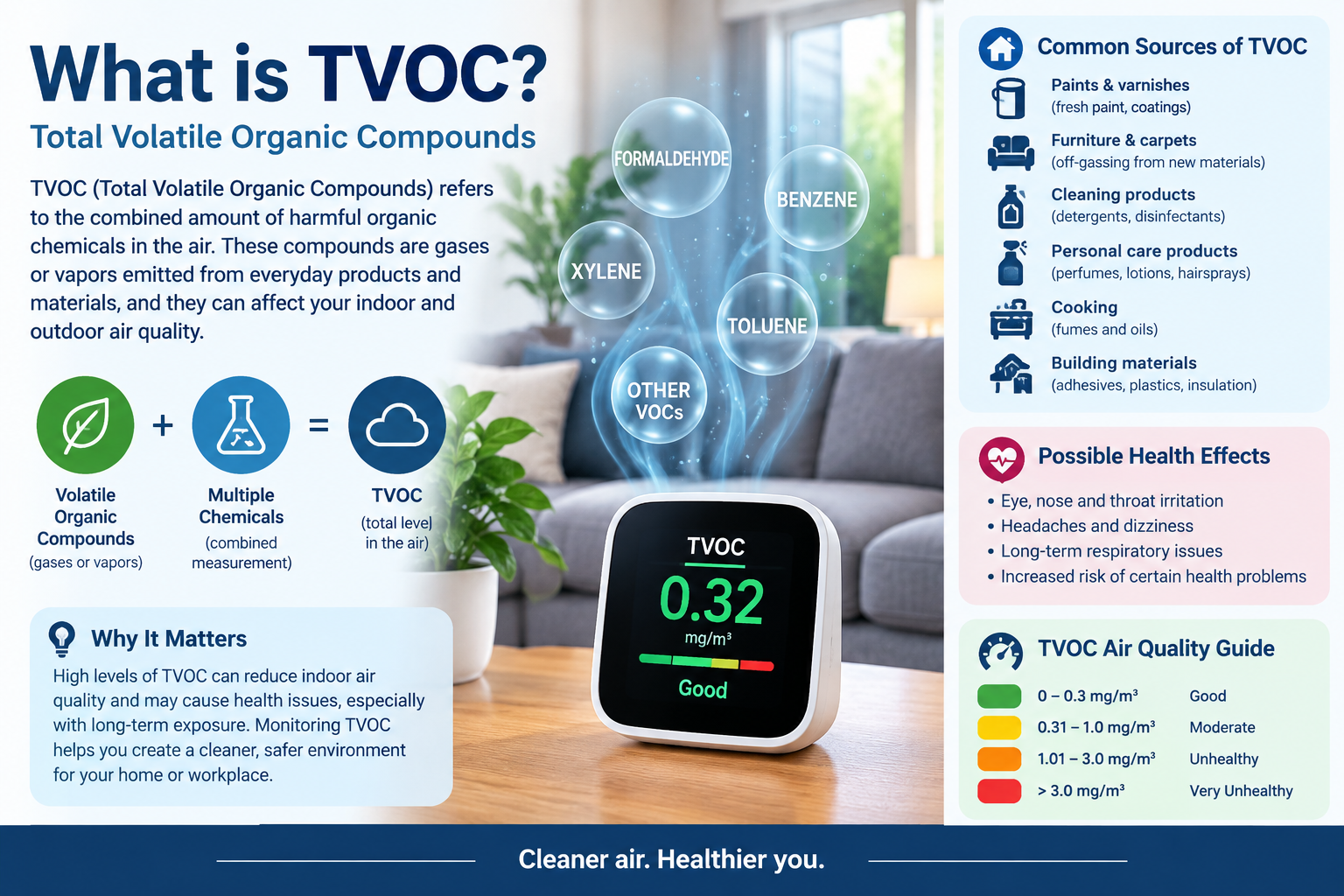
If you are checking an indoor air monitor and wondering what is TVOC air quality, the answer starts with volatile organic compounds. TVOC stands for Total Volatile Organic Compounds, a combined measurement of many airborne chemicals released from household products, furnishings, building materials, cleaners, paints, fragrances, and other sources.
A TVOC reading can help you spot changes in indoor air and identify activities that may be increasing chemical pollution. However, it should not be treated as a complete air-quality score or a direct measurement of health risk because individual VOCs differ greatly in toxicity.
What Does TVOC Mean in Air Quality?
TVOC is an estimate of the total concentration of volatile organic compounds detected in the air.
VOCs are carbon-containing chemicals that can evaporate into the air from liquids and solids. According to the U.S. Environmental Protection Agency (EPA), thousands of household and commercial products can emit VOCs, and concentrations of many VOCs are often higher indoors than outdoors.
Common indoor VOCs may include chemicals associated with:
- Paints and varnishes
- Adhesives and glues
- Cleaning products
- Air fresheners
- Cosmetics and personal-care products
- New furniture and flooring
- Building materials
- Solvents
- Fuel and automotive products
- Printers and office equipment
- Hobby and craft supplies
- Stored household chemicals
Instead of measuring every chemical separately, a TVOC monitor attempts to provide one combined indicator representing the VOC mixture it detects.
TVOC vs. VOC: What Is the Difference?
The distinction is simple but important.
A VOC is an individual volatile organic compound or a category of such compounds. TVOC refers to a combined measurement of multiple VOCs.
| Term | Meaning | What It Tells You |
|---|---|---|
| VOC | Volatile Organic Compound | Refers to an individual chemical or group of volatile chemicals |
| TVOC | Total Volatile Organic Compounds | Provides an overall indicator of VOC pollution detected in the air |
| PM2.5 | Fine particulate matter | Measures tiny airborne particles, not gases |
| CO2 | Carbon dioxide | Can help indicate occupancy and ventilation conditions |
| CO | Carbon monoxide | Measures a potentially dangerous combustion gas |
This distinction matters because a low TVOC number does not guarantee that every individual VOC is at a harmless concentration.
Why Does TVOC Matter for Indoor Air Quality?
TVOC is useful because homes and workplaces contain mixtures of many chemicals rather than a single pollutant.
Tracking the combined VOC level can reveal when indoor chemical pollution rises after activities such as painting, cleaning, using fragrances, installing new furniture, or renovating a room.
The German Environment Agency describes TVOC as a useful indicator for categorising overall VOC pollution and occupant exposure. It also emphasizes that TVOC alone cannot be used to make a complete health assessment.
That makes TVOC most valuable as a screening and trend-monitoring tool, rather than a medical diagnosis or definitive safety test.
What Is a Good TVOC Air Quality Level?
There is no single universal TVOC limit that applies to every home, device, country, or measurement method.
The EPA notes that widely accepted indoor concentration limits do not exist for most pollutants measured by consumer air monitors. Manufacturers may therefore use different thresholds when assigning labels such as “good,” “moderate,” or “poor.”
One commonly referenced framework comes from the German Environment Agency. Its earlier TVOC classification described the following concentration ranges:
| TVOC Level | Concentration | General Interpretation |
|---|---|---|
| Low | ≤ 0.3 mg/m³ | Hygienically safe |
| Moderate | > 0.3–1 mg/m³ | Generally still hygienically safe if individual substances remain acceptable |
| Elevated | > 1–3 mg/m³ | Hygienically perceptible |
| High | > 3–10 mg/m³ | Hygienically risky |
| Very high | > 10 mg/m³ | Hygienically unacceptable |
The German Environment Agency’s more recent guidance also states that unusually high indoor concentrations above 950 µg/m³, equivalent to 0.95 mg/m³, should be avoided as a precautionary measure.
These figures are best treated as reference points rather than universal medical thresholds. Measurement methods, chemical composition, exposure duration, and individual substances all affect how a TVOC result should be interpreted.
Is High TVOC Dangerous?
A high TVOC measurement tells you that the overall level of VOCs detected by the monitor has increased. It does not tell you exactly which chemicals are present or whether the mixture is dangerous.
This distinction is crucial.
Some VOCs have relatively low toxicity at typical indoor concentrations, while others can pose greater concerns. The EPA warns that reducing total VOC concentration alone does not necessarily guarantee a safer chemical mixture because individual VOCs vary substantially in toxicity.
The health significance of VOC exposure depends on factors such as:
- Which VOCs are present
- Their concentrations
- How long exposure lasts
- How frequently exposure occurs
- Ventilation conditions
- Individual sensitivity
- Existing health conditions
For this reason, a persistent high TVOC reading deserves investigation, but the number should not be interpreted in isolation.
What Are the Possible Effects of VOC Exposure?
Exposure to certain VOCs may cause short-term or long-term effects, depending on the chemical, concentration, and duration of exposure.
The EPA lists possible effects associated with some VOC exposures including eye, nose, and throat irritation, headaches, nausea, dizziness, and effects on the central nervous system. Certain organic chemicals are also known or suspected to cause more serious health effects after sufficient exposure.
Possible symptoms associated with elevated VOC exposure can include:
- Eye irritation
- Nose or throat discomfort
- Headaches
- Dizziness
- Nausea
- Fatigue
- Respiratory irritation
These symptoms are not specific to VOC exposure and can have many other causes. A TVOC monitor should therefore never be used as a substitute for professional medical or environmental evaluation.
What Causes High TVOC Levels Indoors?
When TVOC suddenly increases, first look for something that has changed inside the building.
Cleaning Products
Disinfectants, surface cleaners, polishes, degreasers, and aerosol products may release volatile chemicals during and after use.
A sharp TVOC spike immediately after cleaning is therefore not unusual.
Paint, Varnish, and Renovation Materials
Fresh paint, wood finishes, sealants, adhesives, and solvents can produce substantial VOC emissions.
Renovation can also introduce several emission sources simultaneously, making ventilation especially important.
New Furniture and Flooring
Manufactured furniture, cabinetry, flooring, carpets, coatings, and construction products may emit chemicals after installation.
These emissions can be strongest when materials are new and may decrease over time.
Air Fresheners and Fragrances
Scented sprays, perfumes, fragranced cleaners, and some air fresheners can increase the amount of volatile chemicals indoors.
A pleasant smell does not necessarily indicate cleaner air.
Hobby and Craft Materials
Permanent markers, adhesives, paints, resins, photographic materials, and similar products can release VOCs, particularly when used in small or poorly ventilated rooms.
Stored Fuels and Chemicals
Paint thinner, gasoline, pesticides, automotive products, and strong solvents should be stored according to their safety instructions.
Improper indoor storage can contribute to persistent VOC emissions.
Why Does My TVOC Reading Suddenly Spike?
A short-term spike does not automatically mean your home has developed a serious air-quality problem.
Think about what happened immediately before the increase.
Common triggers include:
- Cleaning or disinfecting
- Applying perfume or hairspray
- Cooking
- Painting
- Opening chemical products
- Installing new furniture
- Using adhesives
- Bringing dry-cleaned items indoors
- Closing windows and reducing ventilation
- Moving the monitor closer to an emission source
Consumer sensors can also respond differently to humidity, temperature, and chemical mixtures. The EPA warns that monitor accuracy may be affected by sensor placement, environmental conditions, processing methods, time in use, and the presence of multiple contaminants.
Focus on patterns rather than panicking over a single reading.
How Accurate Are TVOC Air Quality Monitors?
Consumer TVOC monitors can be useful, but their numbers require context.
Low-cost indoor monitors do not provide the same type of analytical information as professional laboratory testing. The EPA notes that information about the accuracy and precision of some consumer air-quality monitors remains limited, and performance varies among manufacturers and devices.
NIST has similarly cautioned against accepting consumer indoor-air sensor readings without considering their technical limitations and verification methods.
Use Your Monitor for Trends
Consumer monitors are often most helpful when you compare your own readings over time.
For example:
- Record the normal TVOC baseline in your home.
- Watch what happens during cleaning.
- Compare readings before and after ventilation.
- Check whether levels rise when using particular products.
- Observe whether elevated levels return every day.
This approach can help locate a source even when the absolute measurement is imperfect.
Where Should You Place a TVOC Monitor?
Placement can dramatically affect your readings.
The EPA recommends placing indoor monitors where occupants normally breathe while avoiding locations where airflow is restricted. For a typical adult, this may mean approximately 3 to 6 feet above the floor, depending on whether occupants are sitting or standing.
Avoid placing the device:
- Directly beside an open window
- Immediately under an HVAC vent
- Next to a stove
- Beside cleaning products
- On top of a paint or chemical cabinet
- Directly beside an air purifier
- In a corner with poor air movement
If you place a TVOC monitor directly next to a source, the reading may represent that tiny area rather than the air you normally breathe.
How to Lower TVOC Levels Indoors
Reducing TVOC is usually more effective when you address the source rather than simply trying to remove pollutants after they enter the air.
1. Identify the Source
Look at the timing of TVOC increases.
If readings rise whenever a particular cleaner, fragrance, hobby material, or appliance is used, you may have identified an important contributor.
2. Increase Ventilation
When outdoor conditions permit, bringing in fresh outdoor air can dilute VOC concentrations.
This is particularly useful when painting, cleaning, installing new materials, or using products that release strong fumes.
3. Reduce Unnecessary Chemical Sources
Avoid using more product than necessary.
Limiting unnecessary fragrances, aerosol sprays, solvents, and similar products can reduce the number of indoor emission sources.
4. Follow Product Instructions
Use products exactly as directed on their labels, especially products containing solvents or other volatile ingredients.
Proper use, storage, and ventilation can significantly affect indoor exposure.
5. Store Chemicals Properly
Keep fuels, solvents, pesticides, paint products, and automotive chemicals tightly sealed and stored in appropriate locations.
Do not keep unnecessary quantities of strong chemicals in occupied indoor spaces.
6. Ventilate After Renovation
Painting, flooring installation, cabinetry, adhesives, and new furnishings can temporarily increase indoor VOC concentrations.
Provide adequate ventilation during and after renovation work whenever conditions allow.
7. Consider Air Cleaning Carefully
Air cleaners are not all equally effective against gases.
HEPA filters are designed primarily for particles such as dust and fine particulate matter. VOC removal generally requires appropriate gas-phase filtration, commonly using materials such as activated carbon or other sorbents.
Even then, filtration should support rather than replace source control and ventilation. The EPA identifies source control, ventilation, and supplemental filtration or air cleaning as the basic strategies for improving indoor air quality.
TVOC vs. PM2.5: Which Matters More?
Neither should be treated as more important in every situation because they represent different forms of air pollution.
PM2.5 measures microscopic particles. TVOC represents volatile chemicals in the gas phase.
You could have:
- Low PM2.5 and high TVOC
- High PM2.5 and low TVOC
- High levels of both
- Low readings for both while another pollutant remains present
For example, painting may cause a large TVOC increase without creating a comparable PM2.5 spike. Smoke from cooking can produce substantial particulate pollution.
A more complete indoor-air assessment therefore considers multiple pollutants rather than relying on a single number.
Does a Low TVOC Reading Mean the Air Is Safe?
No.
A low TVOC reading is useful information, but it does not prove that indoor air is completely safe.
A TVOC sensor may not detect important pollutants such as:
- Carbon monoxide
- Radon
- Fine particulate matter
- Nitrogen dioxide
- Biological contaminants
- Every individual VOC
The EPA specifically cautions that consumer monitors only detect the pollutants or environmental factors they were designed to measure. A single monitor cannot provide a complete representation of indoor air quality.
Carbon monoxide and smoke hazards should always be addressed with properly certified alarms rather than relying on a general-purpose indoor air monitor.
Common TVOC Monitoring Mistakes
Treating One Reading as a Diagnosis
TVOC is an indicator, not a medical test.
Look for repeated patterns and sustained elevations rather than drawing conclusions from one brief spike.
Assuming Every VOC Has the Same Risk
One of the biggest mistakes is treating all VOCs as equally harmful.
Two rooms can have identical TVOC readings while containing very different chemical mixtures.
Trusting the Monitor’s Color Scale Blindly
A manufacturer’s green, yellow, or red indicator may be based on thresholds selected for that particular product.
The EPA notes that widely accepted indoor concentration limits do not exist for most pollutants measured by these devices.
Ignoring the Pollution Source
Running an air cleaner while continuously introducing strong VOC sources is rarely the best first strategy.
Source control should normally come first.
Confusing TVOC With Overall Air Quality
TVOC is one piece of the indoor-air puzzle.
Good air-quality management may also require attention to particulate matter, carbon monoxide, radon, humidity, ventilation, combustion pollutants, and other contaminants.
When Should You Investigate High TVOC Further?
Consider further investigation when TVOC remains unusually elevated even after obvious sources have been removed and ventilation has been improved.
Professional assessment may be especially appropriate when:
- High readings persist for long periods.
- There is a strong unexplained chemical smell.
- Levels repeatedly increase without an identifiable activity.
- The problem began after renovation or water/building damage.
- Multiple occupants experience symptoms indoors.
- You suspect exposure to a particular hazardous chemical.
Professional indoor-air testing can identify individual compounds rather than relying solely on a combined TVOC estimate.
If anyone experiences significant or persistent health symptoms that may be associated with indoor air, seek guidance from an appropriate healthcare professional. The EPA also recommends discussing suspected pollutant-related symptoms with a healthcare provider.
Frequently Asked Questions
What does TVOC stand for?
TVOC stands for Total Volatile Organic Compounds. It represents a combined measure or estimate of multiple volatile organic chemicals in the air.
Is 500 µg/m³ of TVOC bad?
A reading of 500 µg/m³ equals 0.5 mg/m³. Some reference frameworks place this within a moderate range, but there is no universally accepted health threshold for consumer TVOC readings.
Interpret it alongside your usual baseline, possible pollution sources, measurement method, ventilation, and the monitor manufacturer’s guidance.
Is 1,000 µg/m³ TVOC high?
A reading of 1,000 µg/m³ equals 1 mg/m³ and would generally warrant attention, particularly if it persists.
The German Environment Agency currently recommends avoiding unusually high indoor TVOC concentrations above approximately 950 µg/m³ as a precaution. This is an exposure indicator rather than a universal toxicity threshold.
Can opening windows reduce TVOC?
Often, yes.
If outdoor air is suitable, ventilation can dilute VOCs generated indoors. The effectiveness depends on the source, outdoor conditions, building design, and ventilation rate.
Can an air purifier remove TVOC?
Some air cleaners designed for gases may reduce certain VOCs, particularly when they contain a suitable quantity of activated carbon or another gas-sorbent material.
Standard particle-only HEPA filtration should not be expected to remove gaseous VOCs effectively.
Does cooking increase TVOC?
Cooking can release a complex mixture of gases and particles, and some consumer VOC sensors may show increased readings during cooking.
Use a functioning range hood or other appropriate kitchen ventilation whenever possible.
Should TVOC be zero?
Not necessarily.
Many everyday materials naturally or artificially release small quantities of volatile compounds. The practical goal is usually to minimise unnecessary exposure and investigate persistent or unusually elevated readings rather than expecting an absolute zero measurement.
Conclusion: What Is TVOC Air Quality Telling You?
Understanding what is TVOC air quality helps you use indoor-air monitors more intelligently. TVOC represents the combined level of volatile organic compounds detected in the air and can be useful for identifying pollution sources, spotting changes, and evaluating whether ventilation or source-control measures are working.
Do not treat TVOC as a universal health-risk score. Individual chemicals matter, consumer sensors have limitations, and indoor air contains pollutants that TVOC monitors cannot detect. Use TVOC as one part of a broader indoor air-quality strategy built around source control, effective ventilation, appropriate air cleaning, and attention to persistent or unexplained pollution.
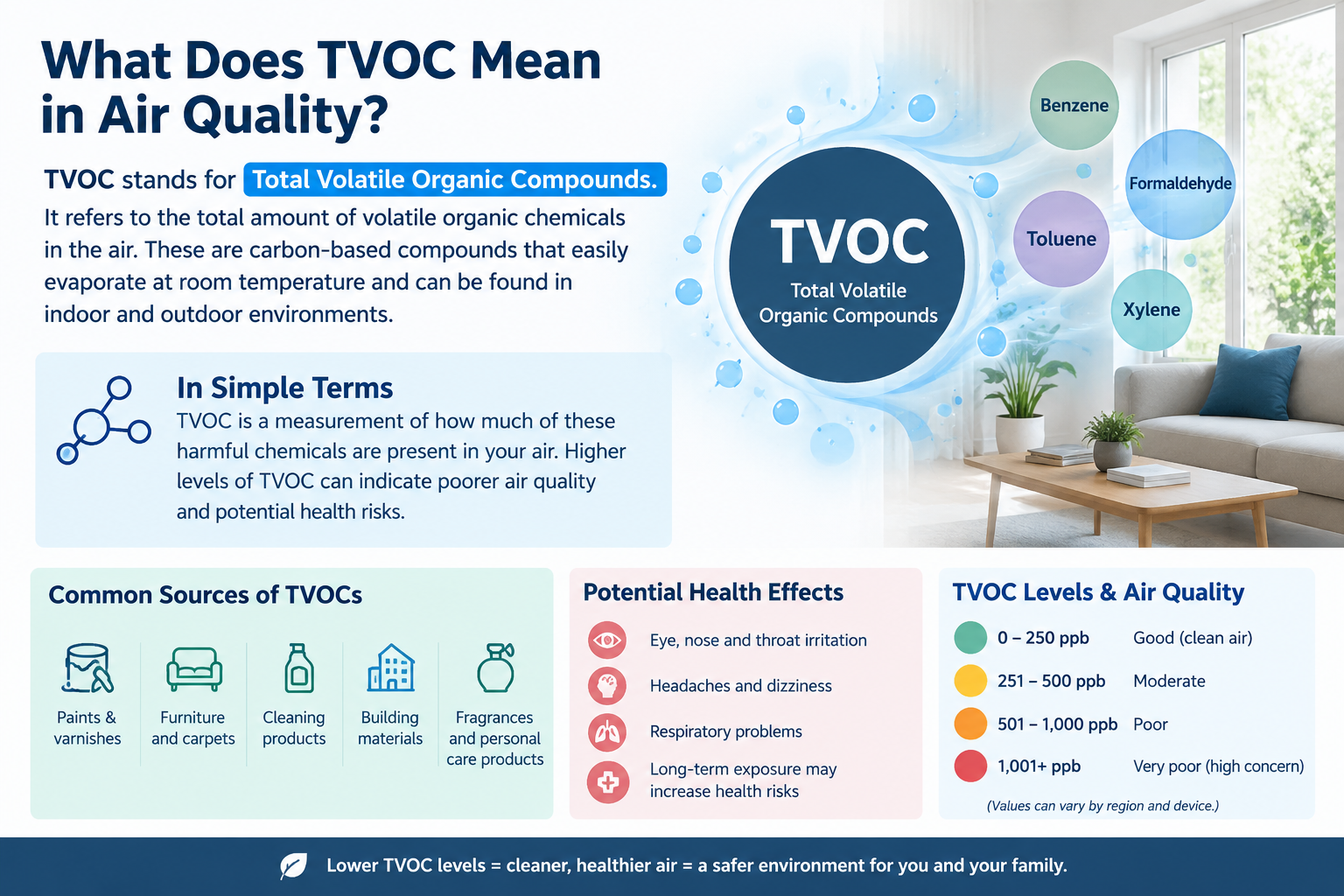
If you are checking an air purifier, indoor air quality monitor, or smart thermostat, you may see a reading labelled TVOC. So, what does TVOC mean in air quality, and should a high number concern you?
TVOC stands for Total Volatile Organic Compounds. It is a measurement or estimate of multiple volatile organic compounds present in the air rather than a reading for one specific pollutant.
VOCs can come from paint, cleaning products, furniture, fragrances, adhesives, building materials, cooking, solvents, and many everyday household products. Understanding your TVOC reading can help you identify indoor pollution and decide when ventilation or source control is needed.
What Is TVOC?
TVOC is short for Total Volatile Organic Compounds.
Volatile organic compounds are carbon-containing chemicals that can evaporate into the air from certain liquids and solids. The U.S. Environmental Protection Agency notes that VOCs are emitted by thousands of products and that concentrations of many VOCs are consistently higher indoors than outdoors.
TVOC combines the VOCs detected by a particular measurement method into a single overall value.
Think of it as an indicator of the total VOC burden in the air, rather than a detailed chemical analysis.
TVOC Is Not One Pollutant
This distinction is important.
A TVOC reading of 500 µg/m³ does not tell you that 500 µg/m³ of one particular chemical is present. It may represent a mixture of numerous compounds detected or estimated by the instrument.
Two rooms could therefore show similar TVOC readings while containing very different chemicals.
That matters because individual VOCs vary greatly in toxicity. The EPA specifically warns that reducing total VOC levels does not automatically guarantee that a product or environment is safer because individual compounds can have very different health effects.
Quick Facts About TVOC in Air Quality
| Question | Answer |
|---|---|
| What does TVOC stand for? | Total Volatile Organic Compounds |
| What does it measure? | The combined amount or estimated level of multiple VOCs |
| Is TVOC the same as VOC? | No. VOC refers to an individual or category of compounds; TVOC is an aggregate measurement |
| Where do VOCs come from? | Cleaning products, paints, furniture, fragrances, adhesives, solvents, building materials and other sources |
| Does high TVOC always mean dangerous air? | No. Risk depends on which chemicals are present, their concentrations and exposure duration |
| Can ventilation lower TVOC? | Often, especially when indoor VOC sources are causing the increase |
| Can an air purifier remove TVOCs? | Some units with sufficient activated carbon or other gas-phase media may reduce certain VOCs |
| Is one TVOC number enough to assess health risk? | No. Individual compounds and exposure conditions also matter |
What Causes High TVOC Levels Indoors?
Indoor environments contain many potential VOC sources. Some release chemicals strongly for a short period, while others continue off-gassing for weeks, months, or longer.
Common sources include freshly painted surfaces, new flooring, cabinets, mattresses, upholstered furniture, adhesives, cleaning chemicals, disinfectants, air fresheners, perfumes, cosmetics, hobby materials, pesticides and stored fuels.
The EPA also identifies paints, lacquers, solvents, wood preservatives, aerosol sprays, cleansers, office equipment and building materials as common sources of indoor VOCs.
New Furniture and Building Materials
A sudden TVOC increase after renovating a room or purchasing new furniture is not unusual.
Manufactured wood, coatings, glues, flooring and other construction materials can release volatile chemicals into indoor air. Emissions may be strongest shortly after installation and gradually decrease.
Temperature can also affect off-gassing. A warmer indoor environment may increase the rate at which some volatile chemicals are released.
Cleaning Products and Fragrances
A TVOC monitor may spike immediately after using cleaning sprays, disinfectants, scented products or air fresheners.
A pleasant smell does not mean the air is chemically clean. Fragrances themselves may contain volatile compounds.
If the reading climbs whenever a particular product is used, the pattern can help identify the source.
Cooking and Everyday Activities
Cooking can also influence indoor VOC measurements.
Heating oils, food and other materials releases a complex mixture of gases and particles. Some consumer-grade TVOC sensors may respond strongly during cooking even when the source is temporary.
The important question is whether the reading drops again after cooking stops and the room is ventilated.
What Is a Good TVOC Level?
There is no single worldwide TVOC number that separates “safe” air from “dangerous” air.
Different organisations, laboratories and sensor manufacturers may use different measurement methods, definitions and reference ranges. More importantly, TVOC represents a mixture, and the toxicity of that mixture depends on the individual compounds present.
Germany’s Federal Environment Agency currently describes TVOC as a useful indicator for assessing overall VOC pollution but states that the TVOC value itself cannot be used for a direct health assessment. It recommends avoiding unusually high indoor concentrations above approximately 950 µg/m³ as a precautionary measure.
Therefore, treat a TVOC value as an air-quality signal, not a medical diagnosis.
Understanding TVOC Units
One reason TVOC readings can be confusing is that devices do not always use the same unit.
You may see concentrations expressed as µg/m³ or mg/m³. Some monitors may instead display parts per billion, an index, a score, or an estimated concentration based on a reference gas.
For reference:
| Unit | Meaning |
|---|---|
| µg/m³ | Micrograms of compounds per cubic metre of air |
| mg/m³ | Milligrams per cubic metre |
| ppb | Parts per billion |
| ppm | Parts per million |
| TVOC index | A manufacturer-specific indicator rather than a direct concentration |
One milligram equals 1,000 micrograms, so 1 mg/m³ equals 1,000 µg/m³.
However, converting a TVOC value from µg/m³ into ppm or ppb is not always straightforward. The calculation depends on the molecular weight of the chemical being measured, while TVOC represents many chemicals.
That is why comparing readings from two different monitors solely by their displayed number can be misleading.
How Do TVOC Sensors Work?
Professional indoor air testing and consumer air-quality monitors do not necessarily measure TVOC in the same way.
Laboratory analysis can collect air samples and identify individual compounds using specialised analytical equipment. Consumer monitors generally need to produce results quickly and inexpensively, so many use gas-sensitive electronic sensors.
Consumer Monitors Usually Estimate TVOC
A home TVOC sensor may respond to a broad group of gases rather than identifying every VOC separately.
Its software then converts the sensor response into an estimated TVOC concentration or air-quality index.
This makes consumer monitors useful for identifying changes and trends. They are less suitable for determining exactly which chemical is present or proving that a room is toxicologically safe.
For example, a monitor that normally reads 100 µg/m³ but suddenly rises to 800 µg/m³ after cleaning is providing useful information even if its absolute laboratory accuracy is limited.
The trend tells you that something changed.
Why TVOC Readings Can Change Suddenly
A TVOC reading that jumps does not automatically mean there is a serious pollution emergency.
Look at what happened in the room shortly before the change.
Opening a container of solvent, painting, cleaning, spraying perfume, cooking, bringing in new furniture or closing the windows can all affect the measurement.
Sensor behaviour may also change with temperature and humidity, depending on the technology used.
A useful indoor monitor should therefore be interpreted over time. Establishing a normal baseline for your home is often more informative than reacting to a single isolated reading.
Are High TVOC Levels Harmful?
Potentially, but TVOC alone cannot determine the exact health risk.
The EPA reports that VOC exposure can be associated with eye, nose and throat irritation, headaches, nausea and other effects. Some organic compounds can also affect the liver, kidneys or central nervous system, while certain individual compounds are known or suspected carcinogens.
The effect depends on the particular chemical, concentration, exposure duration and individual susceptibility.
This is why an apparently moderate TVOC reading cannot guarantee safety. A relatively small concentration of a more hazardous compound may deserve greater attention than a larger concentration of a less harmful compound.
TVOC vs PM2.5: What Is the Difference?
TVOC and PM2.5 describe different forms of air pollution.
TVOC measures or estimates gaseous organic compounds. PM2.5 measures very small airborne particles with diameters of approximately 2.5 micrometres or less.
A room can therefore have low PM2.5 but high TVOC.
For example, fresh paint may create a substantial VOC problem without generating the same particle pattern as smoke. Conversely, wildfire smoke may produce extremely high PM2.5 while the TVOC response depends on the sensor and chemical mixture.
A complete indoor air-quality assessment should not rely on one metric alone.
TVOC vs CO2
TVOC and carbon dioxide also provide different information.
Indoor CO2 is commonly used as an indicator of occupancy and ventilation effectiveness. TVOC is associated with volatile chemicals coming from materials, products and activities.
High CO2 may suggest that fresh-air ventilation is insufficient for the number of people in the room.
High TVOC may instead point toward chemical sources. Both can rise in a poorly ventilated space, but they should not be interpreted as the same pollutant.
How to Reduce TVOC Levels in Your Home
When your TVOC reading remains elevated, finding and controlling the source is generally more effective than simply trying to mask the problem.
- Ventilate the space. Open suitable windows and doors or use mechanical ventilation to increase outdoor-air exchange, particularly after painting, cleaning or using products that release VOCs. The EPA recommends increasing ventilation when products that emit VOCs are used.
- Find the source. Look for recent changes such as new furniture, flooring, paint, adhesives, cleaning products, fragrances or stored chemicals.
- Remove unnecessary emitters. Keep solvents, fuels, paints and strongly scented chemicals out of occupied living areas whenever appropriate and safe.
- Follow product instructions. Use paints, cleaners, adhesives and similar products according to manufacturer ventilation and safety requirements.
- Reduce fragrance use. Air fresheners, sprays and scented products can increase indoor chemical emissions rather than actually cleaning the air.
- Use source ventilation. Exhaust fans can help remove contaminants produced during cooking, cleaning or other indoor activities when properly vented outdoors.
- Consider gas-phase filtration. Activated carbon and other sorbent media can capture some gaseous pollutants, although performance depends heavily on the type and quantity of media.
- Track the trend. Observe whether TVOC falls after ventilation or source removal. A persistent unexplained elevation may justify professional indoor air testing.
Can HEPA Air Purifiers Remove TVOCs?
Not by HEPA filtration alone.
HEPA filters are designed primarily to capture airborne particles such as dust, pollen and fine particulate matter. VOCs are gases, so they can pass through particle-only filtration.
An air purifier intended to reduce VOCs generally needs a gas-phase filter, such as activated carbon or another adsorbent material.
Even then, performance varies considerably.
A thin carbon sheet may have limited capacity compared with a purifier containing a substantial amount of activated carbon. Filters can also become saturated and require replacement.
Source control and ventilation therefore remain important even when an air purifier is used.
Why Your TVOC Monitor May Disagree With Another Monitor
Two TVOC monitors placed next to each other can display different values without either necessarily being defective.
They may use different sensor technologies, reference gases, calibration procedures, algorithms and definitions of TVOC.
One device may respond strongly to alcohol vapours while another responds differently. Humidity and temperature compensation can also vary between models.
For home use, it is often better to follow consistent trends from the same monitor than to assume readings from unrelated devices are directly interchangeable.
Common TVOC Monitoring Mistakes
One of the biggest mistakes is treating TVOC as a precise toxicity score.
A low TVOC reading does not prove that every hazardous chemical is absent, while a temporary high reading does not automatically mean the room is dangerous.
Another mistake is placing the monitor directly beside a purifier, open window, kitchen stove or chemical source. That location may measure a highly localised air sample rather than conditions across the occupied room.
Finally, avoid assuming that “low-VOC” or “zero-VOC” labels eliminate all indoor-air concerns. The EPA notes that VOC terminology used for regulatory purposes does not necessarily capture every volatile chemical that may matter indoors.
When Should You Consider Professional Air Testing?
Professional testing can be useful when elevated TVOC readings persist even after ventilation and obvious sources have been addressed.
It may also be appropriate when there is a strong unexplained chemical odour, a suspected building-material problem, repeated symptoms associated with a particular indoor location, or a need to identify specific compounds rather than simply track overall TVOC.
Professional laboratory testing can provide information that a consumer sensor cannot, including the identity and concentration of individual chemicals.
This distinction is especially important when health decisions depend on the result.
Does Opening Windows Always Reduce TVOC?
Often, but not always.
Opening windows can dilute VOCs generated indoors when outdoor air is cleaner. However, outdoor pollution, nearby traffic, industrial emissions, wildfire smoke, extreme weather or high outdoor humidity may make continuous natural ventilation less desirable.
The goal is not simply to open every window indefinitely.
The better strategy is to combine appropriate ventilation with source control and, when necessary, suitable filtration.
Should You Worry About a Single High TVOC Reading?
Usually, the first step is to investigate rather than panic.
Check whether someone recently cooked, cleaned, painted, used a fragrance, opened a solvent, installed new furniture or changed ventilation conditions.
Then ventilate appropriately and watch what happens to the reading.
A brief spike that quickly returns to baseline tells a different story from a high level that remains for days without an obvious cause.
Persistent patterns deserve more attention than isolated numbers.
Final Takeaway: What Does TVOC Mean in Air Quality?
TVOC means Total Volatile Organic Compounds, an overall indicator of volatile organic gases detected or estimated in the air.
It can help you spot pollution from cleaning products, paint, furniture, building materials, fragrances and other indoor sources. However, TVOC should not be treated as a standalone health or toxicity score because individual VOCs differ substantially in their effects, and consumer monitors vary in how they calculate the value.
Use TVOC readings to identify trends, investigate sources, improve ventilation and determine whether additional air-quality testing is needed.
If you came here asking what does tvoc mean in air quality, the simplest answer is this: TVOC tells you how much volatile organic chemical pollution your monitor is detecting overall, but understanding the source and specific compounds is what turns that number into useful information.



Team Aelftech.com: Services, Team & Buyer’s Guide

Valleygross com: What It Is, Safety & 2026 Guide

guide. simcookie .com: What It Is, What You’ll Find, and What to Know
-

 Fashion9 years ago
These ’90s fashion trends are making a comeback in 2017
-
Entertainment9 years ago
The final 6 ‘Game of Thrones’ episodes might feel like a full season
-
Fashion9 years ago
According to Dior Couture, this taboo fashion accessory is back
-
Business9 years ago
Uber and Lyft are finally available in all of New York State
-
Entertainment9 years ago
The old and New Edition cast comes together to perform
-
Sports9 years ago
Steph Curry finally got the contract he deserves from the Warriors
-
Sports9 years ago
Phillies’ Aaron Altherr makes mind-boggling barehanded play
-
Entertainment9 years ago
Disney’s live-action Aladdin finally finds its stars