
celebrity
Certified Humanist Celebrant Online: Global Guide.

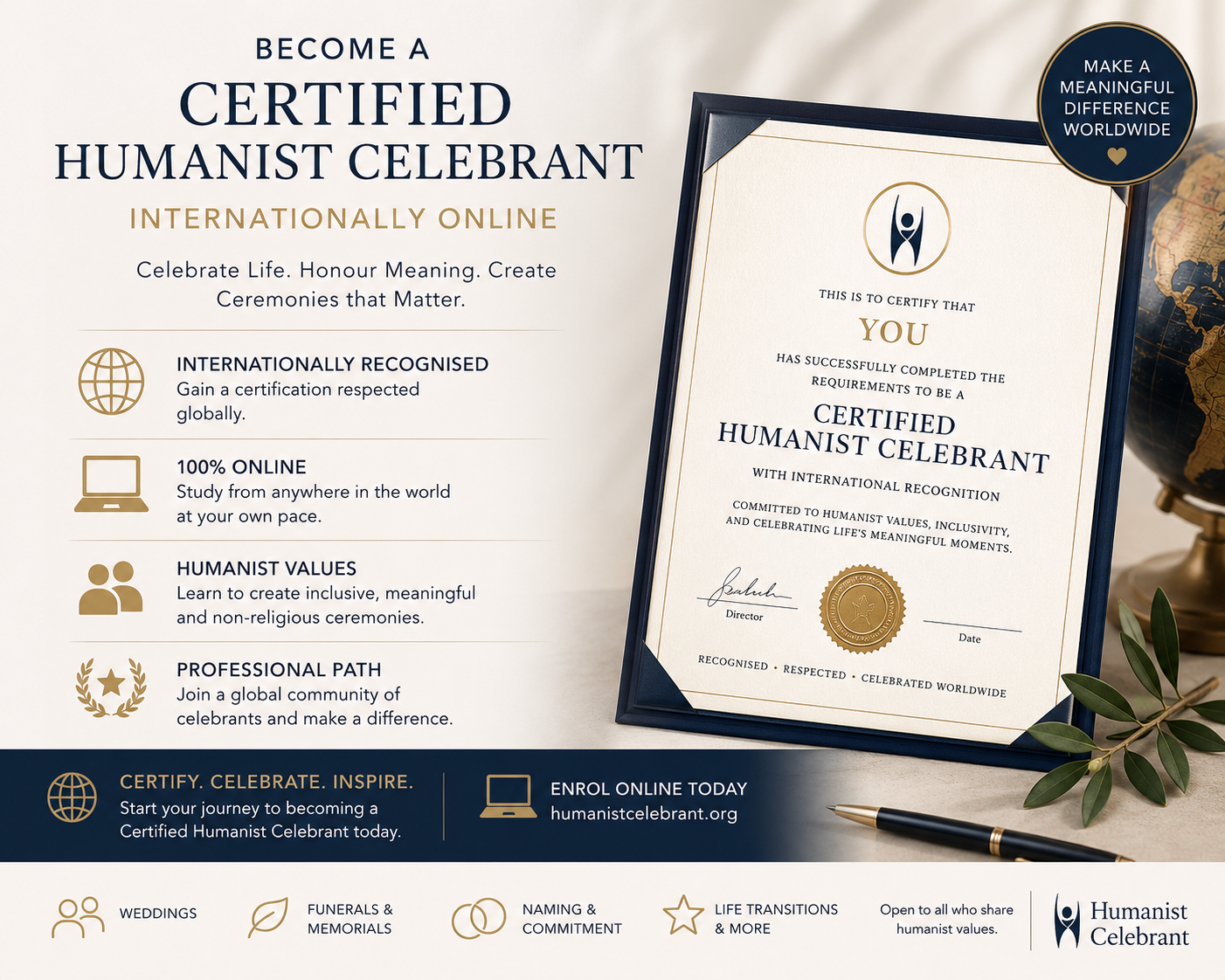
Introduction
A humanist celebrant does more than read a script at a ceremony; they help people mark love, death, birth, identity, and transition without religion. The question is not simply whether online training exists, because it does. The real issue is whether that training gives you international credibility, local legal authority, or both.
Can You Be Certified as a Humanist Celebrant Internationally Online? Overview
| Aspect | Key Details |
|---|---|
| Short answer | Yes, you can complete humanist celebrant or celebrant-style training online through several organizations. |
| Important limit | Online certification does not automatically let you legally solemnize marriages everywhere. |
| Best for | People who want to conduct non-religious weddings, funerals, namings, memorials, vow renewals, and life ceremonies. |
| Legal authority | Marriage authority depends on the country, state, province, or region where the ceremony happens. |
| Humanist requirement | Some organizations require a genuine commitment to humanist values, not just public speaking skill. |
| Fully online options | Some training providers offer online celebrant courses worldwide, while some official humanist bodies use blended or in-person stages. |
| Best first step | Decide whether you want professional ceremony training, official humanist accreditation, or legal marriage authorization. |
Can You Really Become a Humanist Celebrant Online?
Yes, you can train online to become a humanist celebrant, humanist officiant, or secular celebrant, depending on the organization and country. The American Humanist Association says its Center for Education provides both on-site and online celebrant training, while The Humanist Society offers several endorsement levels for celebrants and related humanist roles.
The key phrase is train online, not “gain universal legal power online.” Online learning can teach ceremony writing, public speaking, client interviewing, ethics, ritual structure, grief sensitivity, and business setup. What it cannot do by itself is override the marriage laws of Scotland, England, Ontario, Australia, California, Ireland, or any other jurisdiction.
That is where many search results become confusing. Some pages use words like certified, accredited, endorsed, ordained, authorized, or registered as though they mean the same thing. They do not. A certificate proves training; accreditation shows recognition by a body; legal authorization means the state allows you to perform a legally binding marriage.
Certification, Accreditation, Endorsement, and Legal Authority
Certification Means You Completed Training
A celebrant certification usually means you completed a course and met that provider’s assessment standards. Online celebrant training providers often teach wedding scripts, funeral ceremony structure, vow renewals, storytelling, symbolic rituals, and client consultation. The Celebrants Collective, for example, describes online celebrant courses with tutorials, assignments, membership, certification, and a global trainee base.
Certification can still be valuable even when it does not carry legal marriage power. Many ceremonies are non-legal by nature, including funerals, memorials, baby namings, coming-of-age ceremonies, vow renewals, divorce ceremonies, and commitment ceremonies. In those settings, families often care more about your writing, empathy, confidence, and professionalism than your legal status.
For weddings, certification helps you design and deliver a meaningful ceremony. The legal paperwork may still need to be completed by a registrar, government official, authorized religious minister, or locally recognized officiant. This is common in places where humanist weddings are loved socially but not yet recognized legally.
Accreditation Means a Humanist Body Recognizes You
Accreditation usually means a recognized humanist organization has accepted you into its network after training, assessment, or probation. Humanists UK says its Humanist Ceremonies network is the oldest network of qualified and accredited celebrants in the UK, operating across England, Wales, Northern Ireland, and the Channel Islands.
This matters because humanist celebrancy is not only a ceremony skill. It reflects a non-religious worldview built around reason, compassion, equality, personal meaning, and human responsibility. Strong humanist organizations often assess whether you understand humanism, can represent it honestly, and can work sensitively with people at emotionally important moments.
Humanist Association of Ireland describes a structured route where trainees become provisionally accredited after training and then move toward full accreditation after a probationary period of conducting ceremonies. It also requires membership, communication ability, empathy, presentation skills, organization, record keeping, and commitment to humanism.
Legal Authority Means the Law Allows You to Solemnize Marriage
Legal authority is the most misunderstood part of the topic. A person can be a brilliant certified celebrant and still not be legally allowed to marry a couple in a particular place. The law decides who can solemnize a marriage, and those rules change by country, region, state, province, and sometimes county.
The House of Commons Library stated in March 2026 that England and Wales still do not have legally binding humanist marriages, meaning couples need an additional civil ceremony for legal validity. Scotland is different: Humanist Society Scotland says humanist weddings and civil partnerships are legal there, and that its marriage ceremonies are legally recognized.
Northern Ireland is also different from England and Wales. Humanists UK explains that humanist weddings gained legal recognition in Northern Ireland in 2018, allowing couples to complete the legal documentation and humanist ceremony together when using authorized celebrants. That single example proves the main point: one country name is not enough; you must check the exact jurisdiction.
What Online Humanist Celebrant Training Usually Covers
Online humanist celebrant training usually starts with the role of the celebrant. You learn how to create ceremonies for people who want meaning without religious doctrine. The strongest courses do not simply hand you templates; they train you to listen, interview, write, rehearse, and deliver ceremonies with emotional intelligence.
A good course should include ceremony writing, because this is the craft clients actually experience. You need to turn family stories, values, memories, humor, grief, love, and symbolism into a ceremony that feels personal without becoming awkward or overlong. Strong writing also protects you from generic scripts that sound copied from the internet.
Training should also include client consultation and interviewing. Humanist Association of Ireland specifically highlights the need for listening, empathy, diplomacy, communication, strong interviewing, writing skills, timing, presentation, and practical IT skills. These are not decorative skills; they are the daily work of celebrancy.
The best online courses also cover public speaking, ceremony pacing, music and readings, symbolic acts, inclusivity, funeral sensitivity, safeguarding boundaries, business setup, pricing, marketing, and professional ethics. If the course is serious, it should include feedback on your writing or delivery. Watching videos alone is rarely enough to become a confident celebrant.
Can One Online Certificate Work Internationally?
An online certificate can be internationally useful, but it is rarely internationally authoritative. It can help you show clients, venues, funeral directors, wedding planners, and families that you have studied celebrancy. It can also help you build a portfolio if you want to offer non-religious ceremonies across cultures or destination settings.
The certificate becomes weaker when it is presented as a universal legal license. Marriage law is not global, and the word “international” can easily mislead beginners. A course may accept students from many countries, but that does not mean graduates can legally marry couples in every country.
A better way to think about it is this: your certificate travels with you as professional evidence, but your legal authority must be checked locally. You may be able to perform the symbolic ceremony in one country while a registrar handles the legal part. In another country, your humanist accreditation may be legally recognized if the local system accepts that body.
Country and Region Guide: Where the Rules Differ
United States
In the United States, The Humanist Society says humanist celebrants may legally perform weddings under the jurisdiction of state law and have rights equivalent to ordained clergy. Its celebrant endorsement includes an initial two-year endorsement, humanist understanding, commitment to humanist values, public speaking preference, ongoing AHA membership, and professional fees.
That wording matters because U.S. marriage authority still depends on state and local rules. Some places may require registration before performing a wedding. Others may accept clergy-equivalent status more easily. A U.S.-based humanist celebrant should always verify the marriage license and officiant rules in the state and county where the wedding will happen.
For international students, a U.S. humanist endorsement may add credibility, but it should not be treated as automatic legal authority in your own country. It may support your professional identity as a humanist officiant. It does not replace local civil marriage law.
United Kingdom
The United Kingdom is not one simple legal market for humanist weddings. Humanists UK trains and accredits celebrants across England, Wales, Northern Ireland, and the Channel Islands, but legal recognition differs by place.
In England and Wales, a humanist wedding ceremony is not currently legally binding, according to the House of Commons Library’s March 2026 briefing. That means couples can have a deeply personal humanist ceremony, but they must also complete a civil marriage process to be legally married. For celebrants, this creates a clear business opportunity, but it also requires honest wording on websites and contracts.
In Scotland, humanist weddings are legally recognized when conducted through authorized humanist celebrants. Humanist Society Scotland says humanist weddings and civil partnerships are legal there, and its ceremonies are legally recognized. In Northern Ireland, Humanists UK states that humanist weddings gained legal recognition in 2018 and can include legal documentation at the same ceremony.
Ireland
Ireland has a more formal humanist route through the Humanist Association of Ireland. HAI explains that successful trainees can become provisionally accredited, join a celebrant network, and work toward full accreditation after training and probation.
The Irish route also shows why humanist celebrancy is not just a short online course. The organization lists serious expectations: empathy, writing skill, presentation skill, communication, record keeping, IT ability, availability, and commitment to humanism.
For anyone searching from outside Ireland, this is an important lesson. If your goal is to work legally in a specific country, choose training connected to that country’s recognized body. A broad online certificate may help with skill, but local accreditation is often the route that matters.
Canada
Canada is province-based, so you cannot assume one national rule covers every wedding. Humanist Canada says successful trainees are appointed as Humanist Canada Officiants and, in Ontario, are also registered to solemnize marriage under the Ontario Marriage Act.
Humanist Canada also lists requirements such as at least one year of continuous paid membership, relevant education or equivalent life experience, familiarity with humanist values, and active involvement in Humanist Canada. This makes the route more selective than simply buying a certificate.
For Canadian readers, Ontario is especially important because official humanist officiant recognition is tied to provincial registration. If you are in another province, you need to check the current local rules before advertising legal wedding services. The safest language is to say you conduct humanist ceremonies unless you are formally authorized to solemnize marriages.
Australia
Australia has a clear government pathway for marriage celebrants. The Attorney-General’s Department says applicants can qualify through the Certificate IV in Celebrancy with mandatory marriage celebrancy units, an approved university qualification, or recognized celebrancy skills under the legal framework.
This is not exactly the same as becoming a humanist celebrant through a humanist body. Australia’s legal celebrant system is broader and includes civil celebrants, religious marriage celebrants, and other recognized categories. If your aim is legal marriage work in Australia, the government registration pathway matters more than a general international certificate.
An online or international humanist celebrant course may still improve your ceremony writing and non-religious approach. But to legally solemnize marriages in Australia, you should follow the official registration route. That makes Australia a useful example of the difference between professional training and state authorization.
How to Choose the Right Online Humanist Celebrant Course
Start by asking what you want the course to do for you. If your goal is personal growth, ceremony writing, and confidence, a modern online celebrant course may be enough. If your goal is official humanist accreditation, choose a course connected to a recognized humanist organization in your target country.
Check whether the course teaches weddings, funerals, namings, or all three. Wedding celebrancy and funeral celebrancy use overlapping skills, but the emotional demands are different. Funeral work requires grief awareness, time pressure, family diplomacy, and the ability to write with care when people are in pain.
Look for assessment, not just access. A serious provider should review your ceremony scripts, public speaking, client process, and ethical understanding. If the provider only gives a certificate after passive video watching, it may help with basic knowledge but not professional readiness.
You should also compare price, format, mentoring, community, directory listing, ongoing professional development, and post-training support. Humanists UK’s 2026 wedding and funeral ceremony courses list online induction plus residential stages and a £2,307 fee for new applicants, while its naming ceremony course lists a lower fee. The Celebrants Collective says its course prices start from £1,500 and that its online courses can be studied at your own pace.
Red Flags Before Paying for an International Online Certificate
Be careful with any provider that promises you can legally marry couples anywhere in the world. That claim is too broad because marriage law is local. A trustworthy provider should explain the difference between certification, accreditation, ordination, endorsement, and legal authorization.
Another red flag is vague language around “internationally recognized.” Ask recognized by whom, for what purpose, and in which jurisdiction. A certificate may be recognized by the course provider’s community, but not by a government registrar.
Watch for courses that ignore humanist values. If you specifically want to become a humanist celebrant, the training should cover humanism as a worldview, not just ceremony performance. Humanist organizations often expect genuine commitment to humanist principles, not merely an interest in weddings.
You should also avoid courses with no trainer credentials, no feedback, no sample curriculum, no refund policy, no assessment, and no clear legal disclaimer. A quality course should make you more professional, not just give you a badge. The cheapest certificate can become expensive if it leaves you unable to work confidently.
What Skills Make a Strong Humanist Celebrant?
A strong humanist celebrant is part writer, part interviewer, part speaker, and part emotional guide. You need to be calm with grieving families, warm with nervous couples, and structured enough to manage ceremony timing. The work can feel creative, but it is also practical and detail-heavy.
Writing is the skill that separates average celebrants from memorable ones. Families and couples often bring scattered stories, private jokes, sensitive family dynamics, and mixed emotions. Your task is to shape those details into a ceremony that sounds natural, dignified, and true.
Public speaking matters, but not in a theatrical way. A humanist celebrant should speak with warmth, clarity, and authority without turning the ceremony into a performance about themselves. The focus must remain on the couple, the person who died, the child being named, or the milestone being marked.
Ethics also matter. You must know when to say no, how to handle confidential information, how to respect cultural differences, and how to stay honest about your legal role. That honesty is especially important when clients ask whether you can “officially” marry them.
Can You Work Internationally as a Humanist Celebrant?
You can build an international-style celebrant practice, especially for symbolic destination weddings, multicultural ceremonies, vow renewals, elopements, memorials, and online planning consultations. Many clients want a ceremony that reflects their values rather than a standard religious or civil script. A well-trained humanist celebrant can serve those clients even when the legal paperwork is handled separately.
International work requires careful wording. You can say you conduct non-religious or humanist ceremonies internationally if that is true. You should not say you perform legal marriages internationally unless you are authorized in the exact place where the marriage will be registered.
Destination weddings often separate the legal and ceremonial parts. A couple may complete the legal registration in their home country, then have a humanist ceremony abroad with family and friends. In that situation, your training, writing, and delivery matter more than legal solemnization power.
To work internationally, build a portfolio with sample scripts, testimonials, ceremony types, travel policy, remote consultation process, and clear legal disclaimer. Clients should understand exactly what you provide. Trust grows when your website explains the difference between a symbolic ceremony and a legally binding marriage.
Best Path Depending on Your Goal
If your goal is to become a humanist wedding celebrant, start with a recognized humanist organization in the country where you want to work. That route gives you stronger credibility with clients who specifically want a humanist ceremony. It may also connect you with a directory, mentoring, and continuing professional development.
If your goal is to become a legal marriage officiant, research the government rules first. In some places, humanist bodies are recognized. In others, you may need civil celebrant registration, clergy-equivalent endorsement, provincial registration, or a separate registrar process.
If your goal is to become a funeral celebrant, legal marriage authority may not matter at all. You should prioritize grief training, funeral script writing, family interviewing, working with funeral directors, and managing short timelines. A humanist funeral celebrant must combine compassion with strong structure.
If your goal is to build a global online ceremony business, focus on professional training plus transparent service language. Offer symbolic weddings, memorials, namings, vow renewals, commitment ceremonies, and ceremony coaching. Make sure every location-specific legal claim is checked before you publish it.
How Long Does It Take to Become Certified?
The timeline depends heavily on the training route. Some online celebrant courses are self-paced and can be completed faster if you already have writing, speaking, or pastoral experience. Other humanist organizations use staged training, interviews, mentoring, probation, observation, or continuing development.
Humanists UK’s 2026 course listings show structured dates across induction, general skills, and technical skills, with some stages online and others residential. Humanist Society Scotland says most people take around two years to become fully qualified through its route.
A realistic beginner should not rush the process. You can learn ceremony structure quickly, but confidence takes practice. The first ceremony you deliver should not be the first time someone has reviewed your writing or heard you speak aloud.
How Much Does Online Humanist Celebrant Training Cost?
Costs vary widely because providers are not selling the same thing. A short course, a professional celebrant diploma, official humanist accreditation, and legal marriage registration can all have different fees. You may also pay for membership, application fees, annual professional fees, insurance, website setup, marketing, travel, and ongoing training.
The Humanist Society lists a $60 application fee and annual professional fee for celebrant endorsement, while its senior celebrant level has a higher one-time professional fee. Humanists UK lists £2,307 for new applicants on 2026 wedding and funeral ceremony courses, with naming ceremony training listed separately at £1,421.
The Celebrants Collective states that its course prices start from £1,500 and include online celebrant training, certification, membership, community, and directory-related benefits. These price differences show why you should compare outcomes, not just fees. The cheapest option is not always the best, and the most expensive option is not automatically legally stronger.
Conclusion: 5 Actionable Takeaways
- Choose your goal first, because professional ceremony training, humanist accreditation, and legal marriage authority are three different outcomes.
- Check the law where the ceremony will happen, because an online certificate cannot override local marriage rules.
- Pick a provider that explains its recognition clearly, including whether it offers certification, accreditation, endorsement, registration support, or only training.
- Build real ceremony skills before taking paid bookings, especially writing, interviewing, public speaking, grief sensitivity, and ethical client communication.
- Use honest marketing language on your website, so couples and families know whether you provide a symbolic ceremony, a legally binding wedding, or both.
FAQs
Can you be certified as a humanist celebrant internationally online?
Yes, you can complete online humanist celebrant training or online celebrant certification from providers that accept international students. The certificate can support your credibility and help you conduct non-religious ceremonies, but it does not automatically give you legal authority to solemnize marriages worldwide. Always check the rules in the country, state, province, or region where the ceremony will take place.
Is an online humanist celebrant certificate legally recognized?
An online certificate may be professionally recognized by the training provider or humanist organization, but legal recognition depends on local marriage law. In some places, authorized humanist celebrants can conduct legal weddings, while in others the couple must also complete a civil ceremony. The safest approach is to treat certification as proof of training and legal authorization as a separate local requirement.
What is the difference between a humanist celebrant and an independent celebrant?
A humanist celebrant conducts ceremonies from a non-religious humanist perspective, usually centered on human dignity, reason, compassion, equality, and personal meaning. An independent celebrant may be non-religious, spiritual, interfaith, or flexible depending on the client’s wishes. Both can write beautiful ceremonies, but a humanist celebrant is normally expected to understand and represent humanist values more specifically.
Do you need a degree to become a humanist celebrant?
Most humanist celebrant routes do not require one universal academic degree, but requirements vary by organization and country. Some bodies ask for membership, humanist commitment, writing ability, public speaking skill, life experience, interviews, references, training, assessment, or probation. The more legally recognized the role is in your area, the more formal the route may be.

The digital entertainment world moves faster than ever, and celeborama has become a keyword associated with exploring celebrity-focused content, trending stories, personal journeys, and entertainment updates in one place. Whether audiences are searching for celebrity biographies, lifestyle information, career highlights, or the latest industry conversations, platforms built around celebrity discovery aim to provide an engaging window into the lives of public figures.
Celebrity content is no longer limited to traditional magazines or television programs. Modern audiences want quick access to authentic stories, background information, achievements, controversies, and personal milestones that help them understand the people behind the fame.
This guide explores what makes celebrity-focused platforms valuable, what users expect from them, and how high-quality entertainment content can stand out in a crowded digital landscape.
What Is Celeborama?
Celeborama represents the growing demand for centralized celebrity information where fans can explore stories about actors, musicians, influencers, athletes, and other public personalities.
A modern celebrity platform typically combines:
- Celebrity biographies and career histories
- Trending entertainment updates
- Personal lifestyle insights
- Achievements and milestones
- Social media presence analysis
- Pop culture discussions
The goal is not simply reporting celebrity names but creating meaningful context around their careers, influence, and public image.
Why Celebrity Content Continues to Attract Millions of Readers
Celebrity culture has transformed significantly with the rise of social media. Fans are no longer passive viewers; they actively follow careers, opinions, fashion choices, relationships, and behind-the-scenes moments.
The Rise of Digital Celebrity Discovery
Previously, celebrity information came mainly from:
- Television interviews
- Print magazines
- Entertainment news channels
Today, audiences discover celebrities through:
- Instagram and TikTok updates
- YouTube interviews
- Streaming platforms
- Online entertainment publications
- Search engines
This shift has created demand for platforms that organize celebrity information in an accessible format.
What Users Look for on Celebrity Platforms
Successful celebrity websites focus on user intent rather than simply publishing random updates.
Visitors commonly search for:
Celebrity Background Information
Users want to know:
- Where a celebrity started their career
- Their education and early life
- Major achievements
- Career turning points
Detailed profiles provide long-term value because they remain useful even after trending news disappears.
Latest Entertainment Trends
Entertainment audiences frequently search for:
- New movie announcements
- Award show highlights
- Celebrity collaborations
- Fashion moments
- Public appearances
However, quality matters more than speed. Accurate and well-researched updates build stronger trust.
Celebrity Lifestyle and Personal Stories
People are naturally interested in the human side of famous personalities.
Popular topics include:
- Daily routines
- Fitness journeys
- Business ventures
- Philanthropy
- Personal challenges
The best celebrity content balances curiosity with respect for privacy.
Key Features of a High-Quality Celebrity Platform
A successful platform inspired by the Celeborama concept should focus on several important elements.
| Feature | Why It Matters |
|---|---|
| Detailed profiles | Helps users understand celebrity backgrounds |
| Verified information | Builds audience trust |
| Regular updates | Keeps visitors returning |
| Clear categories | Improves navigation experience |
| Visual storytelling | Increases engagement |
| Original reporting | Creates authority |
How to Create Better Celebrity Profiles
A celebrity profile should go beyond basic facts.
Start With a Strong Introduction
The opening should immediately explain:
- Who the person is
- Why they are famous
- Their biggest contribution
Avoid generic introductions that provide no unique value.
Include Career Evolution
Readers appreciate stories showing progression.
A complete profile can cover:
- Early beginnings
- Breakthrough moment
- Major achievements
- Career challenges
- Current projects
This creates a complete narrative rather than a simple biography.
Add Context and Analysis
The strongest celebrity articles explain:
- Why a career moment mattered
- How public perception changed
- What influenced their success
Context separates valuable content from basic information summaries.
Common Mistakes Celebrity Websites Should Avoid
Many entertainment websites struggle because they focus only on short-term clicks.
Publishing Unverified Rumors
Celebrity audiences are highly sensitive to misinformation.
Avoid:
- Fake relationship claims
- Unconfirmed announcements
- Misleading headlines
Accuracy is essential for building long-term credibility.
Creating Thin Celebrity Pages
A page with only basic information provides little value.
Weak content usually includes:
- Name
- Age
- Profession
- One short paragraph
Strong content provides history, achievements, personality insights, and meaningful details.
Ignoring User Experience
Entertainment websites need fast, enjoyable browsing.
Important factors include:
- Mobile-friendly design
- Easy navigation
- Optimized images
- Clear headings
- Fast loading speed
The Role of SEO in Celebrity Content
Celebrity-related searches are highly competitive. Strong SEO requires understanding what audiences actually want.
Use Topic Clusters
Instead of publishing isolated articles, create connected content around:
- Celebrity profiles
- Career timelines
- Movie or music projects
- Awards history
- Lifestyle features
This helps search engines understand topical authority.
Optimize for Search Intent
Different searches require different content formats.
| Search Query Type | Best Content Format |
| “Who is [celebrity]“ | Detailed biography |
| “[celebrity] latest news” | News update |
| “[celebrity] movies list” | Career guide |
| “[celebrity] net worth” | Financial profile |
Understanding intent improves rankings and user satisfaction.
How Celeborama-Style Platforms Can Build Trust
Google’s modern content guidelines emphasize experience, expertise, authority, and trust.
A trustworthy celebrity platform should:
- Cite reliable sources
- Update outdated information
- Avoid sensational misinformation
- Provide original commentary
- Maintain editorial standards
Readers return to websites they believe are accurate and valuable.
The Future of Celebrity Content
The future of entertainment publishing will combine human storytelling with emerging technology.
Important trends include:
AI-Assisted Personalization
Future platforms may provide:
- Customized celebrity feeds
- Personalized recommendations
- Faster content discovery
Interactive Celebrity Experiences
Audiences increasingly prefer:
- Timeline-based profiles
- Video storytelling
- Interactive galleries
- Social media integration
Greater Demand for Authentic Stories
Modern audiences are moving beyond celebrity headlines. They want:
- Personal journeys
- Career struggles
- Behind-the-scenes experiences
- Genuine achievements
Authentic storytelling will remain one of the strongest drivers of engagement.
Celeborama: A Modern Approach to Celebrity Discovery
The appeal of celeborama reflects a larger shift in how people consume entertainment information. Audiences want more than celebrity names; they want stories, context, and meaningful insights into the personalities they follow.
A successful celebrity platform combines accurate information, engaging storytelling, strong user experience, and responsible reporting. By focusing on quality rather than temporary trends, entertainment websites can create lasting value for readers.
Whether users are discovering a new artist, researching a favorite actor, or following entertainment trends, platforms built around comprehensive celebrity coverage continue to shape how audiences connect with popular culture.

YonoPress is a multi-topic digital publishing website covering practical guides, educational content, business insights, technology, finance, lifestyle, health, travel, and other subjects. Rather than focusing on one narrow niche, the platform organizes articles across several categories for readers looking for accessible information on everyday and professional topics.
That broad approach makes YonoPress particularly relevant for readers who arrive through search with a specific question. You might discover the site while researching artificial intelligence, internet infrastructure, personal finance, education, insurance, digital tools, or lifestyle topics rather than visiting specifically for breaking news.
YonoPress Quick Facts
| Feature | Details |
|---|---|
| Website | YonoPress.com |
| Content format | Online articles and guides |
| Main focus | Multi-topic informational content |
| Key categories | Business, Education, Finance, Health, Technology, Travel, Lifestyle and more |
| Typical reader | People researching practical or informational topics |
| Access | Web-based |
| Content style | Guides, explanations, insights and topical articles |
What Is YonoPress?
YonoPress is an online content publication built around articles from multiple subject areas. Its website describes its purpose around delivering smart insights, practical guides, and trending topics designed to help readers learn and stay informed.
Its homepage currently organizes content into categories including Business, Education, Fashion, Finance, Health, Lifestyle, Pets, Technology, Travel, General, and Blog. This structure makes YonoPress closer to a general-interest digital publication than a specialist website dedicated to a single industry.
That distinction matters. A reader researching payroll providers may have very different needs from someone learning about artificial intelligence or healthy sleep, so the usefulness of YonoPress should be judged article by article rather than treating every section as identical.
What Can You Find on YonoPress?
The easiest way to understand YonoPress is to look at the range of subjects it publishes.
Business
The Business section addresses topics that can affect companies, professionals, entrepreneurs, and digital marketers.
Examples visible on the site include discussions of internet infrastructure, AI-assisted customer communication, voice-search optimization, and artificial intelligence for lead generation.
For business readers, articles of this kind can provide a starting point for understanding unfamiliar concepts before moving to specialist documentation or professional advice where necessary.
Technology
Technology coverage focuses on how digital tools and emerging technologies can be applied in practical situations.
YonoPress has published content involving online graph makers, smart furniture, AI-assisted home design, and 3D-printed housing.
This mix illustrates an important characteristic of the site: technology is often discussed in relation to its real-world applications rather than purely through technical specifications.
Finance
The Finance category covers subjects relevant to individuals, freelancers, and businesses.
Topics displayed on the site include CFD trading, car-insurance lapses, payroll providers, and managing cash flow as a freelancer.
Financial topics require extra care because general educational content cannot account for every reader’s circumstances. When an article involves investing, insurance, taxes, lending, or major financial decisions, verify important claims against regulators, official documentation, or qualified professionals.
Education
YonoPress also explores changes in learning and study habits.
Its Education section has included articles about digital minimalism while studying, AI tutors, immersive AR and VR education, and online trading education.
The strongest use case for such content is often discovery: understanding a concept, learning terminology, and identifying questions worth investigating further.
Health
Health content on YonoPress spans wellness and general educational subjects, including nutrition, vitamin deficiencies, sleep, and men’s mental health.
Readers should make a clear distinction between general health information and personalized medical guidance. Symptoms, treatments, medications, and diagnoses should be checked against reputable medical sources and discussed with an appropriate healthcare professional when necessary.
Lifestyle, Fashion and Travel
The publication extends beyond professional topics into everyday interests.
Lifestyle-oriented categories give YonoPress room to discuss subjects that do not fit neatly into business, finance, education, or technology. Its Fashion section, for example, has featured content about traditional clothing from different cultures.
This broad editorial structure is useful for casual discovery, although readers interested in a highly specialized subject may prefer to combine YonoPress with dedicated expert sources.
How YonoPress Is Organized
A broad publication can quickly become difficult to navigate if every subject is placed in one continuous feed. YonoPress addresses this by separating articles into topical categories.
The site currently lists:
- Blog
- Business
- Education
- Fashion
- Finance
- General
- Health
- Lifestyle
- Pets
- Technology
- Travel
- Uncategorized
This organization gives readers two practical ways to browse. You can follow the newest content across the website or narrow your reading to a category related to your immediate question.
How to Use YonoPress Effectively
Finding an article is only the first step. The more important skill is deciding whether the information actually answers your question.
1. Start With Your Specific Question
Avoid browsing a broad category without knowing what you need.
For example, “artificial intelligence” is an enormous subject. “How can AI improve customer communication?” is a much more useful research question and closely matches the practical style of topics appearing on YonoPress.
2. Choose the Relevant Category
Use the site’s categories to narrow the information available.
A freelancer investigating irregular income might begin in Finance, while a business owner researching customer-service automation could start with Business or Technology.
3. Check the Publication Date
Some information ages much faster than others.
General explanations may remain useful for years, while articles involving software, AI products, financial markets, regulations, insurance rules, prices, or online platforms can become outdated relatively quickly.
Always check when an article was published before relying on time-sensitive details.
4. Separate Explanation From Evidence
A clear explanation helps you understand a subject, but clarity alone does not prove a claim.
When an article makes a consequential factual statement, look for supporting evidence such as:
- Government or regulatory sources
- Peer-reviewed research
- Official company documentation
- Industry standards
- Primary data
- Recognized professional organizations
This habit is particularly important for health and financial content.
5. Cross-Check High-Stakes Information
No general-interest publication should be your sole source for a major medical, legal, financial, or investment decision.
Use YonoPress to develop your understanding, then verify the information through authoritative sources appropriate to the topic.
What Makes YonoPress Useful?
The biggest advantage of YonoPress is breadth.
Readers do not need separate entry points for every general topic. Business, finance, technology, education, health, travel, and lifestyle material can all be explored within the same publication.
There are several practical benefits to this model.
Broad Topic Coverage
Multi-category publishing works well for readers whose interests cross traditional niche boundaries.
A small-business owner, for instance, may need information about AI, payroll, customer communication, cash flow, and digital marketing. Those topics naturally cross Technology, Finance, and Business.
Practical Subject Selection
Many YonoPress headlines are framed around problems or questions rather than abstract academic themes.
Examples on the current site address matters such as improving customer communication with AI, choosing payroll-provider features, understanding internet infrastructure, and managing freelancer cash flow.
That problem-focused approach can make unfamiliar subjects easier to approach.
Easy Discovery
Categories and recent-post sections provide multiple paths into the content.
Instead of knowing the exact title of an article, a reader can begin with an area of interest and discover related subjects from there.
YonoPress Pros and Considerations
| Advantages | Considerations |
| Covers numerous subjects | Broad coverage means expertise may vary by topic |
| Includes practical guides | Important claims should still be independently verified |
| Useful for discovering unfamiliar topics | Not a substitute for specialist professional advice |
| Categories improve navigation | Older content may need freshness checks |
| Mixes professional and everyday subjects | Readers should evaluate individual articles and sources |
The important point is not whether a publication covers many topics. It is whether a particular article provides enough evidence, accuracy, context, and freshness for the decision you are making.
How to Evaluate a YonoPress Article Before Trusting It
Smart readers evaluate the content, not simply the domain name.
A useful five-point check can prevent many research mistakes.
Look for a Clear Author
Knowing who wrote an article gives you another piece of information for evaluating it. YonoPress displays author names and publication dates alongside articles visible on its homepage.
For specialist subjects, consider whether the author demonstrates relevant knowledge or cites people and organizations that do.
Examine the Evidence
Look beyond confident language.
Statistics, medical claims, financial statements, scientific conclusions, and technical recommendations are more useful when you can trace them back to credible evidence.
Check for Recent Information
Freshness matters differently depending on the subject.
An article explaining a timeless study technique does not need to be updated every month. A guide discussing AI software, financial regulations, insurance requirements, or online-platform features may require much more recent information.
Watch for Missing Context
Sometimes an article can be technically correct while still being incomplete.
A financial strategy may work under certain market conditions but not others. A technology may offer impressive benefits while carrying implementation costs, privacy concerns, or technical limitations.
Useful content should help you see those boundaries.
Verify Before Acting
The greater the consequences of being wrong, the stronger your verification should be.
Reading about home design is relatively low risk. Changing medication, investing significant money, or making a legal decision based on a general article is not.
YonoPress vs. Specialist Websites
Neither type of publication is automatically better.
| Need | YonoPress-Style Publication | Specialist Source |
| Discover a topic | Strong fit | Strong fit |
| Understand basic concepts | Useful | Useful |
| Explore multiple categories | Excellent fit | Limited |
| Deep technical research | Depends on article | Usually stronger |
| Professional guidance | Not a replacement | Prefer qualified sources |
| High-stakes verification | Use as secondary reading | Prefer authoritative primary sources |
A sensible research workflow often uses both.
Start with accessible explanatory material to understand the vocabulary and major ideas. Then move to primary documents, specialist publications, official sources, or experts when greater precision is required.
Common Mistakes Readers Should Avoid
One mistake is assuming that a high search ranking automatically means a page is authoritative. Search visibility and subject-matter expertise are different things.
Another is reading only the headline. Headlines simplify topics by necessity, while important limitations may appear deeper in the article.
Readers should also avoid treating old information as current simply because the page remains online. This is particularly risky with fast-moving subjects such as AI, software, investing, regulations, and digital marketing.
Finally, do not confuse informational content with personalized advice. An article can teach you how something generally works without being appropriate guidance for your individual circumstances.
Is YonoPress a News Website or a Blog?
YonoPress is best understood as a multi-category online publication rather than a narrowly defined breaking-news service.
The site itself presents YonoPress around digital news consumption, practical guides, insights, and trending topics, while its visible content includes explanatory and evergreen articles alongside timely subjects.
For readers, that means the platform can be used more like an informational resource: find a relevant topic, understand the basics, and investigate further when the subject requires specialist knowledge.
Who Is YonoPress For?
YonoPress may appeal to readers who prefer having multiple interests covered in one place.
That can include:
- Students exploring unfamiliar concepts
- Professionals researching business or technology trends
- Freelancers looking for practical financial information
- Business owners learning about digital tools
- General readers interested in health and lifestyle subjects
- People looking for introductory explanations before conducting deeper research
Because the site covers substantially different subject areas, however, the best evaluation should happen at the article level.
Frequently Asked Questions About YonoPress
What is YonoPress?
YonoPress is a multi-topic digital publication offering articles and guides across categories such as business, education, finance, health, lifestyle, technology, travel, fashion, and pets.
What is the official YonoPress website?
The publication operates at YonoPress.com.
Is YonoPress free to read?
The publicly accessible website presents its articles directly through its web pages and describes its content offering as freely accessible. Readers should check the site itself for any future changes to access or features.
What topics does YonoPress cover?
Its listed categories include Business, Education, Fashion, Finance, Health, Lifestyle, Pets, Technology, Travel, General, and Blog content.
Does YonoPress publish technology content?
Yes. Technology topics visible on the site include online data-visualization tools, AI, smart furniture, AI-assisted home design, and 3D-printed homes.
Does YonoPress cover finance?
Yes. Its Finance section has covered subjects including freelancer cash flow, payroll providers, insurance, and online trading.
Can I rely on YonoPress for medical or financial decisions?
General articles can help you understand a topic, but consequential health and financial decisions should be verified with authoritative sources and qualified professionals. The same principle applies to any general-interest publication.
How should I research a topic I discover on YonoPress?
Read the full article, check its date and author, identify the evidence behind important claims, and verify consequential information using primary or authoritative sources.
Final Thoughts
YonoPress is a broad digital publication designed around practical information, topical insights, and guides across business, technology, finance, education, health, lifestyle, travel, and other categories. Its greatest strength is the ability to introduce readers to many different subjects from a single website.
Use it as part of a smart research process rather than treating any single webpage as the final word. Start with the relevant YonoPress article, understand the subject, check its freshness and evidence, and verify high-impact information with authoritative sources before making important decisions.

If you searched for wynkmagazine com, you are probably trying to understand what the website is, what kind of information it publishes, or whether it is worth visiting. Rather than treating an unfamiliar domain as automatically trustworthy or suspicious, the useful approach is to examine what can actually be verified.
Wynk Magazine appears to operate as a general-interest online publishing website. Third-party domain information describes it as covering lifestyle, culture, entertainment, fashion, travel, art, and technology, while the domain also appears in a publisher marketplace under broader categories including finance, health, and technology.
This guide explains what is currently known about the site, how readers can evaluate its articles, and what to check before relying on information published there.
wynkmagazine com Quick Facts
| Detail | What We Found |
|---|---|
| Domain | wynkmagazine.com |
| Website name | Wynk Magazine |
| Website type | Online magazine/general content publisher |
| Topics associated with the site | Lifestyle, culture, entertainment, travel, fashion, art and technology |
| Other listed categories | Finance, health and technology |
| HTTPS detected | Yes |
| Infrastructure | Cloudflare detected |
| Best approach | Evaluate important claims article by article |
The domain has been observed using HTTPS and Cloudflare infrastructure. Those are useful technical characteristics, but neither one proves that every article on a website is accurate or editorially reviewed.
What Is wynkmagazine com?
wynkmagazine com refers to the domain WynkMagazine.com, an online publication associated with articles across several broad subject areas.
Available third-party descriptions characterize Wynk Magazine as a platform covering modern lifestyle and culture alongside subjects such as travel, technology, fashion, entertainment, and art.
That broad scope is important for readers. A general-interest website should usually be evaluated differently from a specialized medical journal, government portal, academic publication, or official company website.
Is Wynk Magazine a Traditional Magazine?
It is more useful to think of Wynk Magazine as a web-based publication than to assume it operates like a traditional print magazine.
The distinction matters because the word “magazine” in a domain name does not tell you how its editorial process works.
When evaluating any digital magazine, look for:
- clearly identified authors;
- publication and update dates;
- transparent ownership or editorial information;
- links to original sources;
- corrections when errors are discovered;
- meaningful author expertise for specialist topics.
These signals tell you considerably more than branding alone.
What Topics Does Wynk Magazine Cover?
The available descriptions of wynkmagazine com suggest that its coverage spans multiple categories rather than one narrow specialty.
Lifestyle and Culture
Lifestyle publications typically cover subjects connected with everyday interests, trends, destinations, experiences, and popular culture.
For casual reading, this broad approach can be convenient because readers can discover several subjects through one publication.
The trade-off is specialization. A broad publisher may not provide the same subject-matter depth as a site devoted exclusively to one field.
Travel Content
References to Wynk Magazine found elsewhere on the web associate the domain with travel-related guidance, including destination planning, budgeting, weather considerations, and safety information.
Travel information can become outdated quickly.
Before following a recommendation, independently check current:
- admission prices;
- transportation schedules;
- visa requirements;
- attraction opening hours;
- local regulations;
- weather conditions;
- safety notices.
Official tourism boards, transportation operators, government agencies, and the attraction itself are usually better sources for details that can affect a trip.
Technology
Technology is another category associated with the site. Both a third-party description and a publisher marketplace connect Wynk Magazine with technology content.
For technology articles, check the publication date carefully. Software interfaces, device specifications, subscription prices, security recommendations, and product features can change rapidly.
Health and Finance
A publisher marketplace lists wynkmagazine.com under finance, health, and technology categories.
Readers should apply a higher verification standard to health and financial content because incorrect information in these areas can have meaningful consequences.
For example, health claims should ideally be supported by recognized medical organizations, peer-reviewed evidence, or appropriately qualified professionals. Financial information should distinguish general education from personalized financial advice and cite reliable primary data where relevant.
Is wynkmagazine com Legit?
There is an important distinction between a functioning website and an authoritative source.
Available domain information indicates that WynkMagazine.com has been observed as an active HTTPS-enabled domain using Cloudflare infrastructure. That establishes some basic technical facts, but it does not independently establish the accuracy, ownership transparency, editorial standards, or expertise behind every article.
A better question is therefore:
Is the specific Wynk Magazine article you are reading reliable enough for the decision you need to make?
That can be evaluated much more effectively.
How to Evaluate a Wynk Magazine Article
Use a simple evidence-first process before accepting important information from wynkmagazine com or any unfamiliar publication.
1. Check the Author
Look for a named author rather than relying only on the publication name.
Then ask whether the author’s experience matches the topic. Professional expertise matters much more for medical, financial, legal, and technical claims than it does for a general entertainment article.
2. Check When the Article Was Published
Freshness can fundamentally change the usefulness of online information.
An older article about a historical event might remain perfectly useful. An older article listing software prices, travel costs, regulations, or product specifications might not.
A visible “last updated” date is useful when meaningful revisions have actually been made.
3. Follow the Sources
Strong articles make important claims traceable.
Look for links or references to:
- government agencies;
- official organizations;
- academic research;
- original datasets;
- manufacturers;
- primary interviews;
- established professional bodies.
An article repeating a claim from another general blog provides weaker evidence than one linking directly to the original source.
4. Separate Facts From Recommendations
Statements such as “the museum opens at 9 a.m.” are verifiable facts.
Statements such as “this is the best museum in the city” are judgments.
Good content makes that distinction clear instead of presenting opinions as objective facts.
5. Cross-Check Important Claims
The greater the consequence of being wrong, the more verification you should do.
| Type of information | Recommended verification |
| Entertainment | Usually low |
| General lifestyle tips | Low to moderate |
| Travel inspiration | Moderate |
| Prices and schedules | High |
| Technology security | High |
| Financial decisions | Very high |
| Medical information | Very high |
For high-impact decisions, use the article as a starting point rather than your only source.
Technical Safety: What HTTPS Actually Tells You
Third-party domain data reports HTTPS support for WynkMagazine.com.
HTTPS encrypts information exchanged between your browser and the website. That is valuable, particularly on public networks.
However, HTTPS does not mean:
- every article is factually correct;
- downloads are automatically safe;
- the publisher has been independently vetted;
- advertisements are endorsed by an authority;
- health or financial advice is professionally qualified.
Modern browsers expect HTTPS from legitimate websites, but technically secure communication and editorial trustworthiness are two different questions.
Red Flags to Watch for on Any Online Magazine
Regardless of whether you are visiting wynkmagazine com or another publication, certain patterns deserve additional scrutiny.
Unsupported Claims
Be cautious when an article makes precise or surprising claims without showing where the information originated.
Statistics are particularly important. A percentage without a study, dataset, survey methodology, or primary source is difficult to evaluate.
Outdated Information Presented as Current
Evergreen articles can remain online for years.
Always verify time-sensitive information such as prices, regulations, product availability, software instructions, exchange rates, opening hours, and travel requirements.
Missing Expertise on High-Stakes Topics
A lifestyle writer can reasonably discuss everyday lifestyle ideas.
The standard should be much higher when an article tells readers what to do about an illness, investment, tax issue, cybersecurity incident, or legal problem.
Excessive Promotional Links
Commercial relationships are not automatically problematic. Many legitimate publications rely on advertising, affiliate programs, sponsorships, or paid partnerships.
The key issue is transparency.
Readers should be able to distinguish independent editorial information from advertising or sponsored recommendations.
wynkmagazine com and Guest-Post Listings
One detail worth understanding is that wynkmagazine.com appears in at least one third-party publisher marketplace. The listing categorizes it under finance, health, and technology and displays a publication price.
A marketplace listing alone does not establish how every article on a domain was commissioned or edited.
It does, however, give readers another reason to distinguish editorial authority from publication availability. If an article recommends a company, service, or product, check for disclosures and evaluate the underlying evidence rather than assuming publication itself constitutes endorsement.
Why Source Quality Matters More Than Website Design
A polished website can look authoritative without providing strong evidence. Conversely, an unattractive website can contain excellent primary information.
Visual presentation is therefore a poor shortcut for credibility.
A more useful trust hierarchy looks something like this:
- Primary evidence — official documents, original research, direct records and first-party data.
- Expert interpretation — qualified specialists explaining primary evidence.
- Established secondary reporting — publications that cite and independently verify sources.
- General explanatory content — useful summaries that point readers toward stronger evidence.
- Unsupported aggregation — content that repeats claims without showing their origin.
When reading Wynk Magazine or another general-interest publisher, determine where the individual article falls on that spectrum.
When wynkmagazine com Can Be Useful
General publications can be useful discovery tools.
A site like Wynk Magazine may help readers encounter a destination, topic, technology, cultural trend, or practical idea they had not previously considered.
The most effective approach is to use broad editorial content for discovery and orientation, then move toward authoritative primary sources when accuracy becomes important.
For example, a travel article might introduce you to an attraction. The attraction’s official website should then confirm its current opening hours and ticket requirements.
That two-stage research process is faster and safer than expecting one publication to answer every question.
Common Mistakes Readers Should Avoid
One mistake is treating Google’s ranking as a certificate of accuracy. Search visibility and factual reliability are not the same thing.
Another is assuming that an unfamiliar website must therefore be unsafe. Familiarity is also a weak trust signal.
Instead, evaluate evidence directly.
A third mistake is checking the reputation of the entire domain while ignoring the quality of the specific page. Large websites can contain weak articles, while smaller publishers can occasionally produce exceptionally well-researched work.
A 60-Second Credibility Check
Before relying on an unfamiliar Wynk Magazine page, run through this quick checklist:
- Author: Is a real author clearly identified?
- Date: Is the information current enough for the subject?
- Evidence: Are important claims supported by sources?
- Originality: Does the article provide information rather than merely repeating other websites?
- Expertise: Does the writer have relevant knowledge where expertise matters?
- Disclosure: Are advertisements or commercial relationships clearly identified?
- Cross-check: Can important facts be confirmed through authoritative sources?
If several of these checks fail, treat the information cautiously.
Frequently Asked Questions
What is wynkmagazine com?
wynkmagazine com is the search-friendly form of WynkMagazine.com, a domain associated with the online publication Wynk Magazine. Third-party descriptions associate the site with lifestyle, culture, entertainment, travel, fashion, art, and technology content.
What type of website is Wynk Magazine?
It appears to be a broad online content or magazine-style publication rather than a narrowly specialized resource. The domain has also been listed by a third-party publisher marketplace in finance, health, and technology categories.
Does wynkmagazine.com use HTTPS?
Yes. Third-party domain data has detected HTTPS support on the website.
Does HTTPS mean Wynk Magazine is trustworthy?
No. HTTPS means the browser can establish an encrypted connection with the website. It does not independently verify the accuracy of articles or the expertise of their authors.
Should I trust health or financial advice from Wynk Magazine?
Do not rely exclusively on a general online publication for consequential medical or financial decisions. Check the author’s qualifications, inspect the cited evidence, and verify important information through authoritative specialist sources.
Why might someone search for “wynkmagazine com” instead of the URL?
Users frequently type domain names into search engines without punctuation when they want to find a website, understand an unfamiliar domain, or check what kind of content it publishes.
Is Wynk Magazine useful for research?
It may be useful for discovering topics and gathering introductory context. For academic, professional, medical, legal, financial, or other high-stakes research, follow its sources and verify claims against primary or authoritative references.
Final Verdict on wynkmagazine com
wynkmagazine com appears to refer to a functioning online publication covering a broad mix of subjects, with third-party sources associating Wynk Magazine with lifestyle, culture, entertainment, travel, technology, health, and finance-related content. Available domain data also indicates HTTPS support and Cloudflare infrastructure.
Those facts alone should not be turned into a blanket judgment about credibility. The strongest approach is to assess each article by its author, freshness, sourcing, transparency, and subject-matter expertise.
Use Wynk Magazine for discovery when its content is useful, but verify consequential claims at their original source. That simple habit makes wynkmagazine com—and virtually every other general-interest publication on the web—far more useful as part of a careful research process.


New AnonIB: What It Is, Risks, and Safety Guide

Mygreenbucks Net Jones: What You Need to Know

How to Send GIF in Snapchat: Easy Step-by-Step Guide
-

 Fashion9 years ago
These ’90s fashion trends are making a comeback in 2017
-
Entertainment9 years ago
The final 6 ‘Game of Thrones’ episodes might feel like a full season
-
Fashion9 years ago
According to Dior Couture, this taboo fashion accessory is back
-
Business9 years ago
Uber and Lyft are finally available in all of New York State
-
Entertainment9 years ago
The old and New Edition cast comes together to perform
-
Sports9 years ago
Phillies’ Aaron Altherr makes mind-boggling barehanded play
-
Sports9 years ago
Steph Curry finally got the contract he deserves from the Warriors
-
Entertainment9 years ago
Disney’s live-action Aladdin finally finds its stars